
Buddha (nyorai)
Hōdō Nyorai
宝幢如来
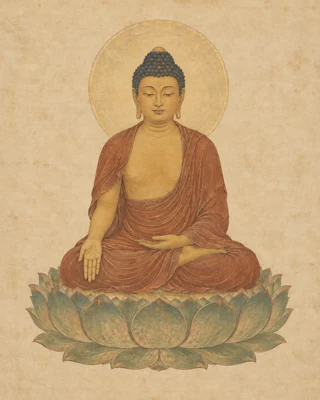
Hōdō Nyorai is one of the four buddhas surrounding Dainichi Nyorai in the Chūdai Hachiyōin (Court of the Eight-Petaled Central Dais). Keio University's explanation of an item in its collection introduces Hōdō as the buddha placed in the east.
This introduces the figure's place in the Chūdai Hachiyō-in of the Womb Realm (Taizō) mandala and the explanation published by Yasuraka-an. It describes religious meaning; it does not determine the outcome of prayers or the customs of all schools.
English pages are the site’s own translations of its Japanese pages. The sources cited are in Japanese. 日本語で読む
The buddha of the east in the Chūdai Hachiyōin
Hōdō Nyorai is one of the four buddhas surrounding Dainichi Nyorai in the Chūdai Hachiyōin (Court of the Eight-Petaled Central Dais). Keio University's explanation of an item in its collection introduces Hōdō as the buddha placed in the east.
Source: 慶應義塾 Keio Object Hub
The meaning held in this faith
Yasuraka-an describes Hōdō Nyorai as the buddha who awakens bodaishin, the mind that seeks awakening. It presents Hōdō as forming the yogan-in, a mudra expressing the will to receive people's wishes, in a form that symbolizes the first step on the Buddhist path.
Source: 高野山真言宗 やすらか庵
A form based on the sources
Drawn with reference to the type seated on a lotus pedestal, without ornaments, forming the yogan-in. The facial features, the color of the robes, the halo and the details of the lotus pedestal are the artist's own creation.
Source: 高野山真言宗 やすらか庵
Mantra (in Japanese, as written in the sources)
ノウマク・サマンダボダナン・ラン・ラク・ソワカ
Source: 高野山真言宗 やすらか庵
Shown as written in the Japanese sources. This site does not set how or how many times to recite it.