
Deva (ten) or guardian deity
Fūten
風天
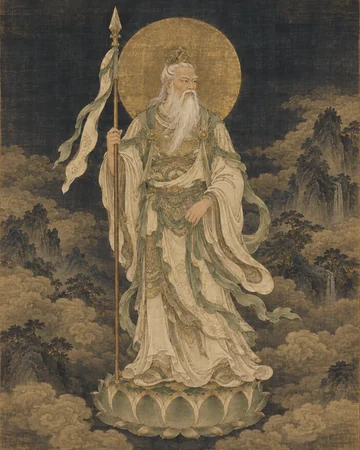
Regarded as the deva in charge of the northwest among the Twelve Devas, it is described as the lord of wind gods and of 流行神.
This introduction is based on materials from Shōhōin (Tobi Fudō). It is summarized within the scope of the beliefs and traditions those materials convey, and does not present explanations or customs common to all schools, shrines, and temples.
English pages are the site’s own translations of its Japanese pages. The sources cited are in Japanese. 日本語で読む
The name and role of Fūten
Regarded as the deva in charge of the northwest among the Twelve Devas, it is described as the lord of wind gods and of 流行神. In ancient Indian mythology it is regarded as a god emphasizing the speed and destructive power of the wind, and as a god protecting Buddhism it is introduced as being enshrined at gates as a pair, the wind god and the thunder god.
Source: 飛不動尊 正宝院・飛不動尊 正宝院・飛不動尊 正宝院
Tracing its form and traditions
It often takes the form of an old man, holding in its right hand a spear with a banner attached, and the tip of the spear is said to be a crescent moon and a jewel, or a single-pronged form. It is also recorded in forms riding a deer or sitting on a leaf.
Source: 飛不動尊 正宝院・飛不動尊 正宝院・飛不動尊 正宝院
Gods who guard the directions, heaven and earth, and the sun and moon
The Twelve Devas are guardian deities connected with the eight directions (the four cardinal points and the four corners), above and below, the sun and the moon. To Taishakuten, Katen, Enmaten, Rasetsuten, Suiten, Fūten, Tamonten and Ishanaten are added Bonten, Chiten, Nitten and Gatten. They are a group that welcomes gods who protect nature and space into Buddhist ritual.
Source: 飛不動尊 正宝院
Protecting the place of ritual and praying to remove calamity
Shōhōin links the Twelve Devas with prayers for harmony with nature and for warding off calamity, and describes them as beings who protect the place of the denpō kanjō ritual. The direction and attributes of each deity belong to this system of protection. It is a group separate from classifications of Shinto kami and from the twelve signs of the Western zodiac.
Source: 飛不動尊 正宝院
Mantra (in Japanese, as written in the sources)
おん ばやべい そわか。
Source: 飛不動尊 正宝院
Shown as written in the Japanese sources. This site does not set how or how many times to recite it.