
Bodhisattva (bosatsu)
Sankaie Bosatsu
山海恵菩薩
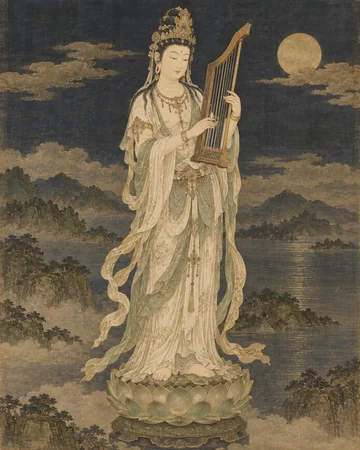
This bodhisattva is listed as one of the Twenty-Five Bodhisattvas.
This introduction is based on materials from Shōhōin (Tobi Fudō). It is summarized within the scope of the beliefs and traditions those materials convey, and does not present explanations or customs common to all schools, shrines, and temples.
English pages are the site’s own translations of its Japanese pages. The sources cited are in Japanese. 日本語で読む
The name and role of Sankaie Bosatsu
This bodhisattva is listed as one of the Twenty-Five Bodhisattvas. It is described as a being who guides living beings with wisdom and virtue likened to the deep sea and high mountains.
Source: 飛不動尊 正宝院・飛不動尊 正宝院・飛不動尊 正宝院
Tracing the form and the traditions
The object held is a kugo (箜篌), with a note that it is a kind of harp-like instrument.
Source: 飛不動尊 正宝院・飛不動尊 正宝院・飛不動尊 正宝院
Protecting those who wish for rebirth in the Pure Land
The Twenty-Five Bodhisattvas are bodhisattvas who protect those who wish to be reborn in the Pure Land of Amida Buddha. A Jōdo Shū dictionary explains the protection of practitioners taught in the Jū Ōjō Amida Bukkoku Kyō as the basis of this faith. Rather than assigning separate effects such as luck with money or success in study to each, they can be understood first through their work of salvation as a group.
Source: 浄土宗
Raigō paintings and the bodhisattvas of the Nerikuyō
As Pure Land faith spread, the Twenty-Five Bodhisattvas came to be depicted in raigō paintings, in which they come with Amida Nyorai to welcome the dying, and in the Nerikuyō procession. This is explained as a development from the understanding that bodhisattvas who protect practitioners in daily life would also protect them at the moment of death. Objects held, such as musical instruments and lotus pedestals, differ by source; the individual forms shown here are mainly based on Shōhōin's materials, which introduce the Butsuzō Zui.
Source: 浄土宗・飛不動尊 正宝院
Related kami and buddhas
Sources (in Japanese)
- 飛不動尊 正宝院「仏様の世界:山海恵菩薩」(2026-10-14 確認)
- 飛不動尊 正宝院「仏様の世界:目次」(2026-10-14 確認)
- 飛不動尊 正宝院「仏様の世界:二十五菩薩」(2026-10-14 確認)
- 浄土宗「新纂浄土宗大辞典:二十五菩薩」(2026-10-15 確認)