
Star or lunar mansion
Seishuku (井宿)
井宿
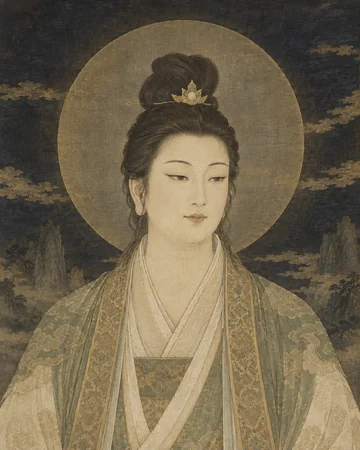
This mansion is listed as the 22nd of the Twenty-eight Mansions. The Twenty-eight Mansions are an old astronomical division that tracks near which stars the moon appears. This page introduces the form in which that division is represented as a Buddhist deity.
This introduction is based on materials from Shōhōin (Tobi Fudō). It is summarized within the scope of the beliefs and traditions those materials convey, and does not present explanations or customs common to all schools, shrines, and temples.
English pages are the site’s own translations of its Japanese pages. The sources cited are in Japanese. 日本語で読む
The name and role of Seishuku (井宿)
This mansion is listed as the 22nd of the Twenty-eight Mansions. Its Japanese name is "Chichiriboshi," and it is described as corresponding to μ in the present-day constellation Gemini. The table of good and bad fortune is not covered.
Source: 飛不動尊 正宝院・飛不動尊 正宝院・飛不動尊 正宝院
Tracing the form and traditions
The Japanese name and the corresponding present-day constellation are given. There is no description of its form or attributes as a deity.
Source: 飛不動尊 正宝院・飛不動尊 正宝院・飛不動尊 正宝院
Twenty-eight star divisions for reading the moon's course
The Twenty-eight Mansions (nijūhasshuku) are an old astronomical division that tracks near which stars the moon appears. Seven mansions are assigned to each of four groups, east, north, west, and south, which are linked with the Azure Dragon, the Black Tortoise, the White Tiger, and the Vermilion Bird. Their way of dividing the sky differs from that of the Twelve Palaces, which divide the path of the sun into twelve.
Source: 飛不動尊 正宝院
Star faith preserved in calendars and images
The Twenty-eight Mansions have also been connected with judging good and bad fortune in the calendar and with faith that worships the stars. Shōhōin states that the forms of the mansions are not fixed, and publishes images based on the Butsuzō Zui. They are introduced here as historical calendar notes and beliefs, not as a definitive judgment of good or bad fortune for anything done today.
Source: 飛不動尊 正宝院・飛不動尊 正宝院
Related kami and buddhas
Sources (in Japanese)
- 飛不動尊 正宝院「仏様の世界:井宿」(2026-10-14 確認)
- 飛不動尊 正宝院「仏様の世界:目次」(2026-10-14 確認)
- 飛不動尊 正宝院「仏様の世界:二十八宿」(2026-10-14 確認)
- 飛不動尊 正宝院「仏様の世界:九曜星」(2026-10-14 確認)