
Kannon (bodhisattva)
Merō Kannon
馬郎婦観音
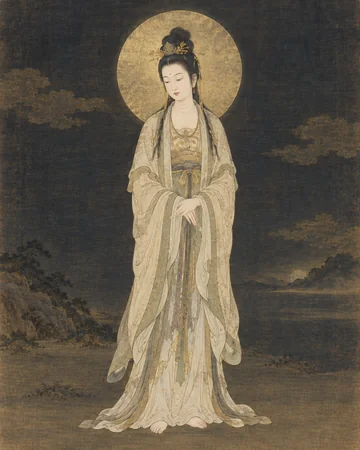
A Kannon belonging to the group of the Thirty-Three Kannon. These Thirty-Three Kannon are a group of images that express Kannon's salvation in various forms. They do not correspond one by one, name for name, to the thirty-three manifested forms in the sutra.
This introduction is based on materials published by shrines, temples, and schools, starting with Shōhōin. It is summarized within the scope of the beliefs and traditions those materials convey, and does not present explanations or customs common to all schools, shrines, and temples.
English pages are the site’s own translations of its Japanese pages. The sources cited are in Japanese. 日本語で読む
The name and role of Merō Kannon
A Kannon belonging to the group of the Thirty-Three Kannon. While buddhas are usually said to have no gender, this one is regarded as clearly female, and it is described as a Kannon who took the form of a beautiful woman in order to open people's hearts and teach them.
Source: 飛不動尊 正宝院・飛不動尊 正宝院・飛不動尊 正宝院
Kannon's compassion, saving by changing form
The images of the Thirty-Three Kannon are associated with the thirty-three manifested forms (ōgenshin), in which Kannon changes form according to the person to be saved. However, the thirty-three names in this list, such as Yōryū Kannon and Suigetsu Kannon, are not identified one by one with the thirty-three manifested forms listed in the sutra. Various beliefs and pictorial traditions of India, China and Japan overlap in them.
Source: 飛不動尊 正宝院・浅草寺
Iconographic sources that hand down thirty-three forms
Shōhōin introduces this group based on the Butsuzō Zui, published in the Edo period. The names express attributes, dwelling places, gestures, saving works and so on. Some figures have their own origin stories, while for others the form and name are central, so not every figure necessarily has a separate story or particular prayer associated with it.
Source: 飛不動尊 正宝院
Compassion that listens to suffering and leads to peace
Sensō-ji explains Kannon as a buddha who receives people's voices, removes their suffering and gives them ease. Turning one's heart to salvation from hardship is an entry point to understanding Kannon devotion. This explains the compassion common to Kannon and is not a list assigning particular benefits to each of the thirty-three images.
Source: 浅草寺
Related kami and buddhas
Sources (in Japanese)
- 飛不動尊 正宝院「仏様の世界:馬郎婦観音」(2026-10-14 確認)
- 飛不動尊 正宝院「仏様の世界:目次」(2026-10-14 確認)
- 飛不動尊 正宝院「仏様の世界:三十三観音」(2026-10-14 確認)
- 浅草寺「浅草寺のご本尊」(2026-10-14 確認)
- 龍雲山 太興院「太興院の仏さま:十六羅漢・観音(接賓)」(2026-10-16 確認)