
Deva (ten) or guardian deity
Kōmokuten
広目天
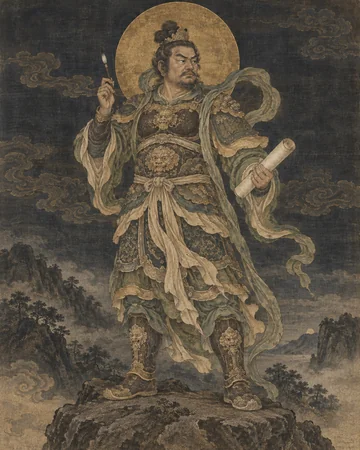
Kōmokuten is a guardian deity who is in charge of the west among the Four Heavenly Kings and is said to protect Saigokeshū, the western continent of Mount Shumisen.
This introduction is based on materials from Shōhōin (Tobi Fudō). It is summarized within the scope of the beliefs and traditions those materials convey, and does not present explanations or customs common to all schools, shrines, and temples.
English pages are the site’s own translations of its Japanese pages. The sources cited are in Japanese. 日本語で読む
The name and role of Kōmokuten
Kōmokuten is a guardian deity who is in charge of the west among the Four Heavenly Kings and is said to protect Saigokeshū, the western continent of Mount Shumisen. Besides the Four Heavenly Kings, Kōmokuten is also presented in the list of the Twenty-Eight Bushū.
Source: 飛不動尊 正宝院・飛不動尊 正宝院・飛不動尊 正宝院
Tracing the form and the traditions
When painted, the skin is said to be of a flesh-colored tone. It is explained that the figure commonly wears armor, has a wrathful face and holds a brush in the right hand and a scroll in the left, though this is not fixed. Two seed syllables, "bi" and "sa", are recorded.
Source: 飛不動尊 正宝院・飛不動尊 正宝院・飛不動尊 正宝院
Four heavenly kings who protect the Buddhist teaching from the four directions
The Four Heavenly Kings are Jikokuten of the east, Zōchōten of the south, Kōmokuten of the west and Tamonten of the north. They are taught to serve Taishakuten and to protect the world of Mount Shumisen and the Buddhist teaching. In temples they are placed so as to surround the four sides, as deities who protect the principal object of worship and the teaching.
Source: 飛不動尊 正宝院
Protection expressed in armed forms
In the lecture hall of Tō-ji as well, the Four Heavenly Kings, together with Bonten and Taishakuten, protect the nyorai, bodhisattvas and myōō. The armor and weapons, and the demons underfoot, express the power of protection visually. Objects held and color schemes differ from statue to statue.
Source: 真言宗総本山 東寺・飛不動尊 正宝院
Mantra (in Japanese, as written in the sources)
おん びろばくしゃ のうぎゃ ぢはたえい そわか。
Source: 飛不動尊 正宝院
Shown as written in the Japanese sources. This site does not set how or how many times to recite it.
Related kami and buddhas
Sources (in Japanese)
- 飛不動尊 正宝院「仏様の世界:広目天」(2026-10-14 確認)
- 飛不動尊 正宝院「仏様の世界:目次」(2026-10-14 確認)
- 飛不動尊 正宝院「仏様の世界:四天王」(2026-10-14 確認)
- 真言宗総本山 東寺「天、菩薩、明王、如来」(2026-10-15 確認)