
Deva (ten) or guardian deity
Makakara Daikokunyo
摩伽迦羅大黒女
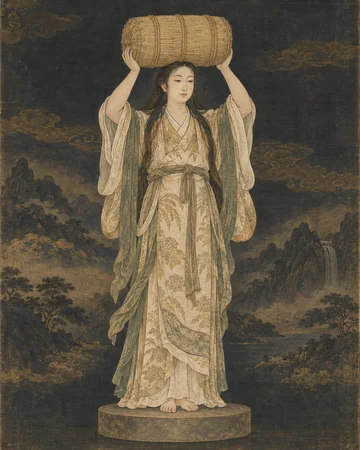
Listed as one of the Six Daikoku (Roku Daikoku) and described as Daikoku's consort and a goddess of abundant harvests. The Six Daikoku are six forms that Shōhōin introduces as the family and retinue of Daikokuten. Devotion to Daikokuten combines Buddhist protection with prayers concerning food and good fortune.
This introduction is based on materials from Shōhōin (Tobi Fudō). It is summarized within the scope of the beliefs and traditions those materials convey, and does not present explanations or customs common to all schools, shrines, and temples.
English pages are the site’s own translations of its Japanese pages. The sources cited are in Japanese. 日本語で読む
The name and role of Makakara Daikokunyo
Listed as one of the Six Daikoku and described as Daikoku's consort and a goddess of abundant harvests. Her form is said to carry a rice bale on her head. The text is short, and no other features can be confirmed.
Source: 飛不動尊 正宝院・飛不動尊 正宝院・飛不動尊 正宝院
The diverse development of Daikokuten devotion
The Six Daikoku are six forms introduced as the family and retinue of Daikokuten. Daikokuten combines the character of a stern deity who protects Buddhism with devotion related to food and good fortune. The form changed across periods and regions, and in Japan it was also merged with Ōkuninushi no Mikoto.
Source: 飛不動尊 正宝院
From guardian of the kitchen to many forms
Shōhōin notes that Daikokuten was enshrined in monastery dining halls and kitchens, and that as devotion spread, forms such as the three-faced Daikoku, the Six Daikoku and the husband-and-wife Daikoku arose. The Daikokuten of the Seven Gods of Good Fortune, holding rice bales and a mallet, is not the only form. The individual forms of the Six Daikoku show this diverse development.
Source: 飛不動尊 正宝院
Related kami and buddhas
Sources (in Japanese)
- 飛不動尊 正宝院「仏様の世界:摩伽迦羅大黒女」(2026-10-14 確認)
- 飛不動尊 正宝院「仏様の世界:目次」(2026-10-14 確認)
- 飛不動尊 正宝院「仏様の世界:六大黒」(2026-10-14 確認)