
Bodhisattva (bosatsu)
Hōkōō Jizō
放光王地蔵
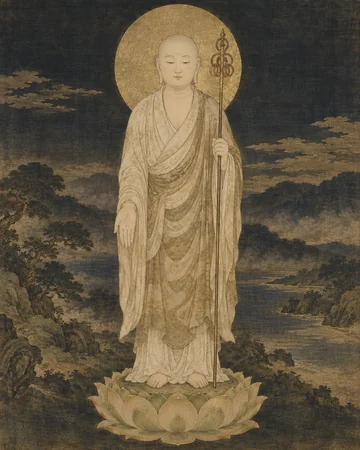
A Jizō Bosatsu listed as one of the Six Jizō (Roku Jizō).
This introduction is based on materials from Shōhōin (Tobi Fudō). It is summarized within the scope of the beliefs and traditions those materials convey, and does not present explanations or customs common to all schools, shrines, and temples.
English pages are the site’s own translations of its Japanese pages. The sources cited are in Japanese. 日本語で読む
The name and role of Hōkōō Jizō
A Jizō Bosatsu listed as one of the Six Jizō. In the source, it is handed down as a being that brings rain and makes the five grains ripen, and it is introduced as a Jizō whose work is connected with farming.
Source: 飛不動尊 正宝院・飛不動尊 正宝院・飛不動尊 正宝院
Tracing the form and traditions
Its form is described as holding a ringed staff (shakujō) in the left hand and making the wish-granting mudra (yogan-in) with the right. This combination of the ringed staff and the wish-granting mudra is given as a feature of this Jizō.
Source: 飛不動尊 正宝院・飛不動尊 正宝院・飛不動尊 正宝院
Close to the suffering of the six worlds
The Six Jizō are a form of devotion to Jizō Bosatsu, who saves the beings of each of the six realms: hell, hungry ghosts, animals, ashura, humans and heavenly beings. They have been enshrined at places such as cemetery entrances, with prayers for the salvation of the dead. Seen together, the six figures express Jizō's work of bringing salvation to every circumstance.
Source: 浄土宗
The Six Jizō have more than one set of names
Shōhōin lists six figures including Yotenga Jizō, and another six including 地持地蔵. The combinations of names, forms and attributes are not fixed. This site also keeps the two sets separate; it does not mean that all twelve form a single set of Six Jizō.
Source: 飛不動尊 正宝院
Related kami and buddhas
Sources (in Japanese)
- 飛不動尊 正宝院「仏様の世界:放光王地蔵」(2026-10-14 確認)
- 飛不動尊 正宝院「仏様の世界:目次」(2026-10-14 確認)
- 飛不動尊 正宝院「仏様の世界:六地蔵」(2026-10-14 確認)
- 浄土宗「新纂浄土宗大辞典:六地蔵」(2026-10-15 確認)