
Star or lunar mansion
Kayōsei
火曜星
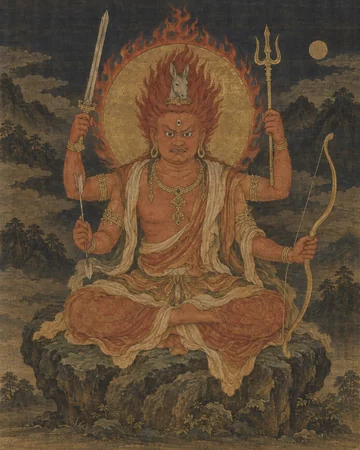
A star listed as the sixth of the Nine Luminaries (Kuyō). The Nine Luminaries are a grouping of the sun, the moon, five planets, and Ragō and Keito. Ragō and Keito are not actual planets; they relate to the points where the apparent paths of the moon and the sun cross.
This introduction is based on materials from Shōhōin (Tobi Fudō). It is summarized within the scope of the beliefs and traditions those materials convey, and does not present explanations or customs common to all schools, shrines, and temples.
English pages are the site’s own translations of its Japanese pages. The sources cited are in Japanese. 日本語で読む
The name and role of Kayōsei
A star listed as the sixth of the Nine Luminaries. Its principal deity is Hachiman Daibosatsu, and its direction is south, which is also south in the Taizōkai (Womb Realm) mandala. There is a description of good and bad fortune for the years that fall under this star.
Source: 飛不動尊 正宝院・飛不動尊 正宝院・飛不動尊 正宝院
The Nine Luminaries, expressing heavenly bodies as deities
The Nine Luminaries are the seven luminaries — the sun, the moon, Mercury, Venus, Mars, Jupiter and Saturn — with Ragō and Keito added. Ragō and Keito are concepts related to the points where the apparent paths of the moon and the sun cross, not two planets visible to the naked eye. Here we introduce images that express heavenly bodies as Buddhist deities.
Source: 飛不動尊 正宝院
Prayers to remove misfortune and invite blessings at the hoshi matsuri
Shōhōin explains the hoshi matsuri (star festival) as a Buddhist service that worships the Nine Luminaries and the Twenty-Eight Lunar Mansions and prays to remove misfortune and invite blessings. In the grouping of the Nine Luminaries, knowledge that tracks the movements of the heavens overlaps with the wish to spend each day in peace.
Source: 飛不動尊 正宝院
Mantra (in Japanese, as written in the sources)
オンアギャラキャアロギャソワカ
Source: 高野山真言宗 宝泉寺(金沢・五本松)
Shown as written in the Japanese sources. This site does not set how or how many times to recite it.
Related kami and buddhas
Sources (in Japanese)
- 飛不動尊 正宝院「仏様の世界:火曜星」(2026-10-14 確認)
- 飛不動尊 正宝院「仏様の世界:目次」(2026-10-14 確認)
- 飛不動尊 正宝院「仏様の世界:九曜星」(2026-10-14 確認)
- 高野山真言宗 宝泉寺(金沢・五本松)「よく使われる真言【永久保存版】」(2026-10-20 確認)