
Kami of the Kojiki
Kehi no Ōkami
気比大神
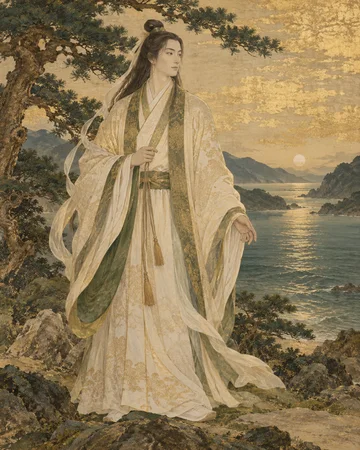
After Empress Jingū returned, when Takeuchi no Sukune no Mikoto took the crown prince to Tsunuga to perform purification, the kami dwelling there appeared in a dream and asked to exchange names with the crown prince. When this was agreed, the next morning dolphins with injured noses had been washed up on the beach, and the crown prince rejoiced that he had been granted fish for his meals. For this reason the kami was praised as Miketsu Ōkami, and it is said that it is now called Kehi no Ōkami.
This page introduces the name and the story recorded in the Kojiki.
English pages are the site’s own translations of its Japanese pages. The sources cited are in Japanese. 日本語で読む
Story and genealogy in the Kojiki
After Empress Jingū returned, when Takeuchi no Sukune no Mikoto took the crown prince to Tsunuga to perform purification, the kami dwelling there appeared in a dream and asked to exchange names with the crown prince. When this was agreed, the next morning dolphins with injured noses had been washed up on the beach, and the crown prince rejoiced that he had been granted fish for his meals. For this reason the kami was praised as Miketsu Ōkami, and it is said that it is now called Kehi no Ōkami.
Source: 國學院大學・國學院大學・國學院大學・青空文庫/武田祐吉校訂
Names and how they are recorded
Other names include Izasawake no Ōkami no Mikoto and Miketsu Ōkami.
Source: 國學院大學・國學院大學・國學院大學
Scenes in the text
Appears in the Kojiki in “Kehi no Ōkami” (Record of Emperor Chūai). You can trace the relevant passages of the text through the sources below.
Source: 國學院大學・國學院大學・國學院大學・青空文庫/武田祐吉校訂
An example of a chant (in Japanese)
祓え給い、清め給え、神(かむ)ながら守り給い、幸(さきわ)え給え
Sources (in Japanese)
- 國學院大學「古事記ビューアー・神名データベース「伊奢沙和気大神之命」」(2026-10-15 確認)
- 國學院大學「古事記ビューアー・神名データベース「気比大神」」(2026-10-15 確認)
- 國學院大學「古事記ビューアー・神名データベース「御食津大神」」(2026-10-15 確認)
- 青空文庫/武田祐吉校訂「校註 古事記 〔氣比の大神〕」(2026-10-15 確認)