
Kami of the Kojiki
Nigihayahi no Mikoto
邇芸速日命
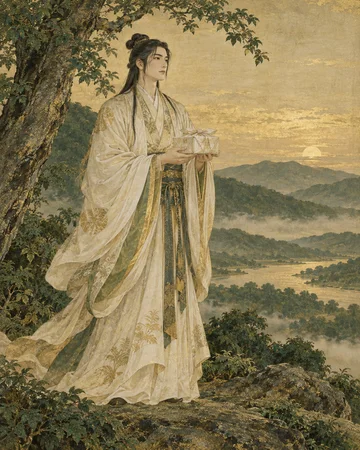
Nigihayahi no Mikoto came down to the earth following the descent of the child of the heavenly kami, presented the heavenly tokens (amatsushirushi) to Kamuyamato Iwarebiko no Mikoto, who had reached Yamato, and served him. He took Tomiyabime, the younger sister of Tomibiko, as wife and fathered Umashimaji no Mikoto, the ancestor of the Mononobe no Muraji and others.
This page introduces the name and the story recorded in the Kojiki.
English pages are the site’s own translations of its Japanese pages. The sources cited are in Japanese. 日本語で読む
Story and genealogy in the Kojiki
Nigihayahi no Mikoto came down to the earth following the descent of the child of the heavenly kami, presented the heavenly tokens (amatsushirushi) to Kamuyamato Iwarebiko no Mikoto, who had reached Yamato, and served him. He took Tomiyabime, the younger sister of Tomibiko, as wife and fathered Umashimaji no Mikoto, the ancestor of the Mononobe no Muraji and others.
Source: 國學院大學・青空文庫/武田祐吉校訂
Scenes in the text
Appears in the Kojiki in “The Kume Songs” (Record of Emperor Jinmu). You can trace the relevant passages of the text through the sources below.
Source: 國學院大學・青空文庫/武田祐吉校訂
Faith concerning recovery from illness and the making of things
Ishikiri Tsurugiya Jinja enshrines Nigihayahi no Mikoto (饒速日尊) and his son Umashimade no Mikoto, and introduces the faith in recovery from illness and the shrine's origins connected with the making of things in relation to the Mononobe clan. This explanation is based on the shrine's tradition that it has inherited the Ten Sacred Treasures (Tokusa no Kandakara), and it can be followed separately from the story in the text of the Kojiki.
Source: 石切劔箭神社
An example of a chant (in Japanese)
祓え給い、清め給え、神(かむ)ながら守り給い、幸(さきわ)え給え
Related shrines and temples
Sources (in Japanese)
- 國學院大學「古事記ビューアー・神名データベース「邇芸速日命」」(2026-10-15 確認)
- 青空文庫/武田祐吉校訂「校註 古事記 〔久米歌〕」(2026-10-15 確認)
- 石切劔箭神社「御由緒・御祭神」(2026-10-17 確認)