
Deity of shinbutsu shūgō (kami–buddha syncretism)
Uhō Dōji
雨寶童子
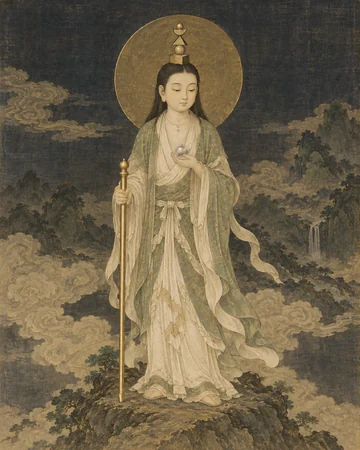
Uhō Dōji is regarded, in Ryōbu Shintō, which overlays the teachings of kami and buddhas, as the form in which Amaterasu Ōmikami descended to earth. Hōgon-ji on Chikubushima enshrines this deity in its Uhōdō. This does not mean that Shinto in general uniformly defines the form of Amaterasu Ōmikami as this youth.
This introduction is based on materials from Shōhōin (Tobi Fudō). It is summarized within the scope of the beliefs and traditions those materials convey, and does not present explanations or customs common to all schools, shrines, and temples.
English pages are the site’s own translations of its Japanese pages. The sources cited are in Japanese. 日本語で読む
A manifestation of Amaterasu Ōmikami taught in Ryōbu Shintō
Uhō Dōji is regarded, in Ryōbu Shintō, which overlays the teachings of kami and buddhas, as the form in which Amaterasu Ōmikami descended to earth. Hōgon-ji on Chikubushima enshrines this deity in its Uhōdō. This does not mean that Shinto in general uniformly defines the form of Amaterasu Ōmikami as this youth.
Source: 竹生島 宝厳寺
A youth with a gorintō, a jeweled staff and a jewel
In Hōgon-ji's guide, he is represented as a youth with a five-tiered tower (gorintō) on his head, a jeweled staff (hōbō) in his right hand and a jewel in his left. Shōhōin's image also conveys the same features. From a form accompanied by Buddhist symbols, one can learn of a faith that grew within the combination of kami and buddhas.
Source: 竹生島 宝厳寺・飛不動尊 正宝院
Mantra (in Japanese, as written in the sources)
オン・バソタレイ・ソワカ
Source: 稲荷山眞長寺(金沢・寺町)
Shown as written in the Japanese sources. This site does not set how or how many times to recite it.
Sources (in Japanese)
- 飛不動尊 正宝院「仏様の世界:雨寶童子」(2026-10-14 確認)
- 飛不動尊 正宝院「仏様の世界:目次」(2026-10-14 確認)
- 竹生島 宝厳寺「宝厳寺探訪:雨宝堂」(2026-10-15 確認)
- 稲荷山眞長寺(金沢・寺町)「ホッと法燈 in てらまちだい 文化祭(令和7年度):雨寶童子開扉法要」(2026-10-20 確認)