
A different iconographic form
Ashura
The Ashura statue at Kofukuji
Ashura is one of the Eight Devas who protect the Buddha and his teachings. The three-faced, six-armed statue at Kofukuji is a National Treasure from Japan’s Nara period.
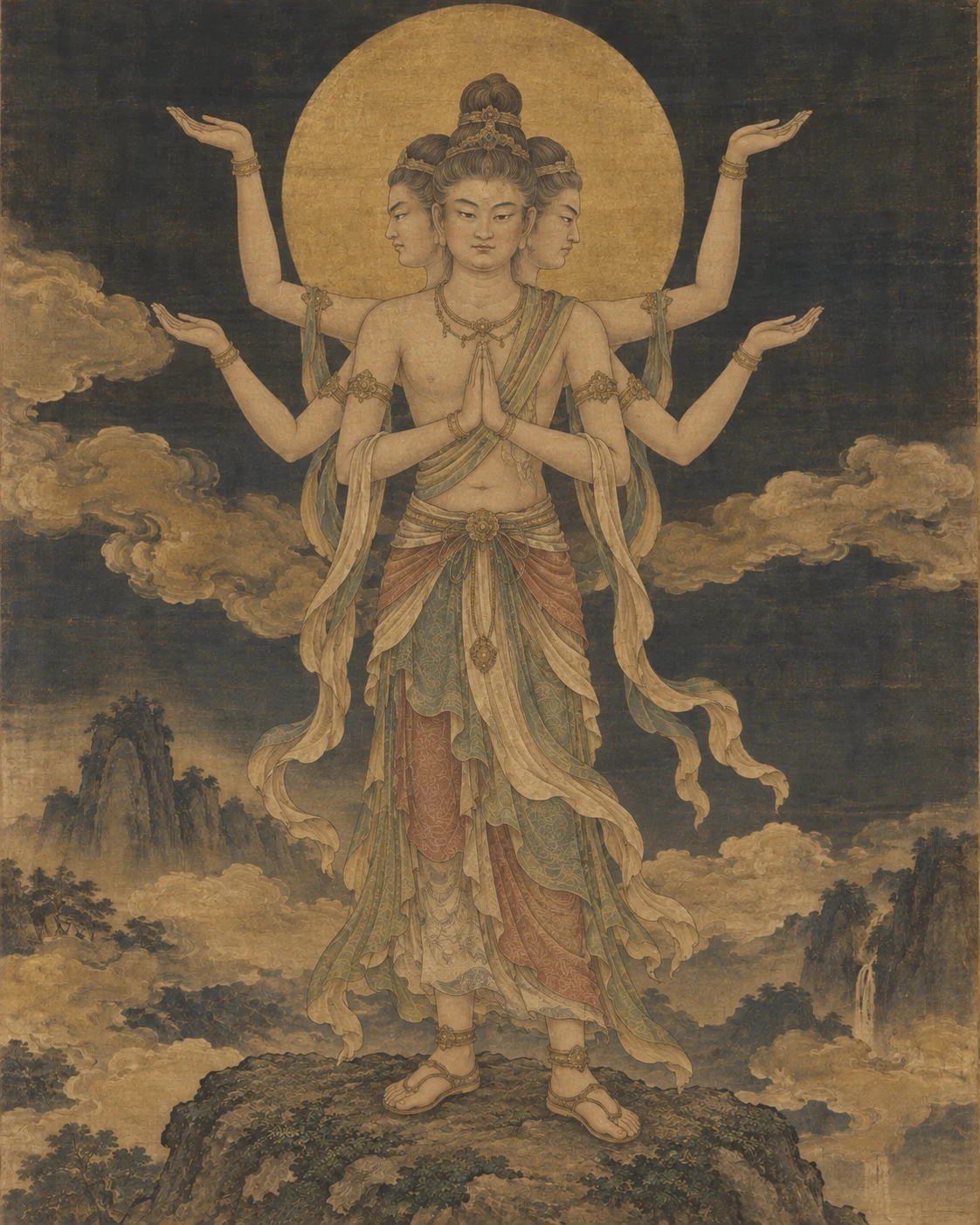
Six arms and four arms
Ashura’s number of arms and clothing vary between iconographic forms. The Kofukuji statue has three faces and six arms; Shoboin’s guide presents Ashura King with three faces and four arms. Both depict Ashura. This site introduces the two forms on separate pages.
- This page: Ashura
- Three faces and six arms: the form of the statue preserved at Kofukuji.
- Existing page: Ashura King
- Three faces, four arms; based on Shoboin’s iconographic guide.
Who is Ashura?
Ashura originated in India and was incorporated into Buddhism as a guardian of the Buddha and his teachings. The Kofukuji statue belongs to the Eight Devas who attend Shaka. These guardians include figures with bird faces or multiple arms, as well as more human forms.
Sources
東京国立博物館「国宝 阿修羅展」 ↗Three faces and six arms
The Kofukuji statue has a face at the front and one on either side. Its foremost pair of hands joins in prayer at the chest; the other four arms extend to either side. Slender arms and a slim body distinguish the figure.
Sources
興福寺「阿修羅像【八部衆】」 ↗東京国立博物館「国宝 阿修羅展」 ↗国土交通省・古都奈良の文化財多言語解説整備推進協議会「阿修羅像」 ↗A youthful face and flowing drapery
Ashura can be depicted as an armored figure expressing intense anger. The Kofukuji statue instead has a slender, youthful body and a quiet expression. Sashes, ornaments and a lower garment clothe the unarmored figure.
Sources
興福寺「阿修羅像【八部衆】」 ↗東京国立博物館「国宝 阿修羅展」 ↗国土交通省・古都奈良の文化財多言語解説整備推進協議会「阿修羅像」 ↗A hall built in memory of a mother
The statue originally stood in Kofukuji’s Western Golden Hall. Empress Komyo built the hall for the first anniversary memorial of her mother, Tachibana no Michiyo. Ashura formed part of an ensemble that included the Shaka triad, the Ten Great Disciples and the Eight Devas.
Sources
東京国立博物館「国宝 阿修羅展」 ↗A dry-lacquer statue made in 734
The statue dates to 734 and stands 153.4 centimeters tall. It was made using the hollow-core dry-lacquer technique, in which layers of hemp cloth and lacquer form the figure. Its delicate faces and slender arms have survived from the Nara period.
Sources
東京国立博物館「国宝 阿修羅展」 ↗国土交通省・古都奈良の文化財多言語解説整備推進協議会「阿修羅像」 ↗The actual statue and temple
For current access and display information, consult Kofukuji’s own guidance. This personal website is not affiliated with the temple.
Kofukuji: National Treasure Hall ↗About the illustration
This is an original AI-assisted painting informed by the statue’s iconography. It is not a photograph, a certified reproduction, or an image supplied or approved by Kofukuji.