
Deva (ten) or guardian deity
Taishakuten
帝釈天
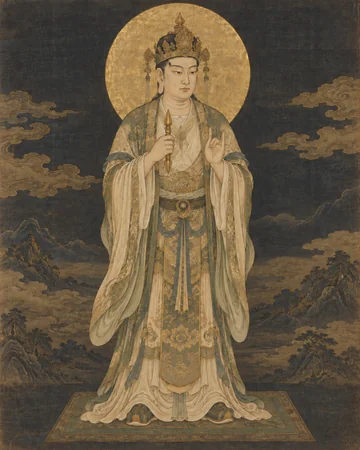
Taishakuten is listed as the deva (tenbu) in charge of the east among the Twelve Devas (Jūniten). The Twelve Devas are a group of guardian deities connected with the eight directions, above and below, and the sun and moon.
This introduction is based on materials from Shōhōin (Tobi Fudō). It is summarized within the scope of the beliefs and traditions those materials convey, and does not present explanations or customs common to all schools, shrines, and temples.
English pages are the site’s own translations of its Japanese pages. The sources cited are in Japanese. 日本語で読む
The name and role of Taishakuten
Taishakuten is listed as the deva in charge of the east among the Twelve Devas. It is said that he was originally a human being who became lord of the gods through his good deeds. He is also listed among the Twenty-eight Attendants.
Source: 飛不動尊 正宝院・飛不動尊 正宝院・飛不動尊 正宝院
Tracing the form and traditions
Many other names are given for him, such as Tentei, Tentaishaku, and Indara. He is said to live in Zenkenjō (Kikenjō), the palace on the summit of Mount Shumisen, and to come to observe the good and evil of the world in the first, fifth, and ninth months; these three months of abstinence (sanchō saigatsu) are explained as having led to the Japanese custom of shōgokumairi, visits in the first, fifth, and ninth months.
Source: 飛不動尊 正宝院・飛不動尊 正宝院・飛不動尊 正宝院
Deities who guard the directions, heaven and earth, and the sun and moon
The Twelve Devas are guardian deities connected with the eight directions (north, south, east, west, and the four corners), above and below, the sun, and the moon. They are Taishakuten, Katen, Enmaten, Rasetsuten, Suiten, Fūten, Tamonten, and Ishanaten, together with Bonten, Jiten, Nitten, and Gatten. They are a group that welcomes deities who guard nature and space into Buddhist ritual.
Source: 飛不動尊 正宝院
Guarding the place of ritual, and prayers to remove calamity
Shōhōin links the Twelve Devas with harmony with nature and with prayers to drive away calamity, and explains them as beings who guard the place of the denbō kanjō (transmission consecration). The direction and attributes of each figure belong to this system of protection. They are a group separate from classifications of Shinto kami and from the twelve signs of the Western zodiac.
Source: 飛不動尊 正宝院
Mantra (in Japanese, as written in the sources)
なうまく さまんだぼだなん いんだらや そわか。
Source: 飛不動尊 正宝院
オン インドラヤ ソワカ
Source: Wikipedia
Shown as written in the Japanese sources. This site does not set how or how many times to recite it.
Related kami and buddhas
Sources (in Japanese)
- 飛不動尊 正宝院「仏様の世界:帝釈天」(2026-10-14 確認)
- 飛不動尊 正宝院「仏様の世界:目次」(2026-10-14 確認)
- 飛不動尊 正宝院「仏様の世界:十二天」(2026-10-14 確認)
- 飛不動尊 正宝院「仏様の世界:二十八部衆」(2026-10-14 確認)
- Wikipedia「帝釈天(基礎情報欄の真言・陀羅尼)」(2026-10-19 確認)