
Other figure
Hoteison
布袋尊
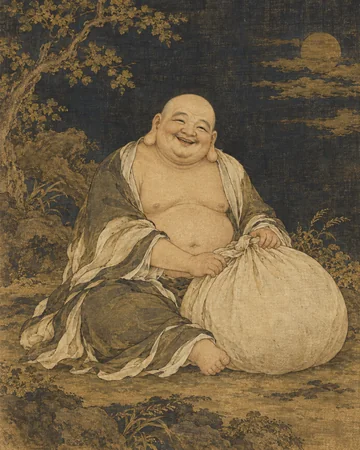
Hotei is a figure derived from a monk in China who called himself Kaishi. He came to be called Hotei from his appearance walking about with a large bag, and later became beloved as one of the Seven Gods of Good Fortune (Shichifukujin). Memories of a monk who actually lived overlap with the traditions of a god of fortune.
This introduction is based on materials published by shrines, temples, and schools, starting with Shōhōin. It is summarized within the scope of the beliefs and traditions those materials convey, and does not present explanations or customs common to all schools, shrines, and temples.
English pages are the site’s own translations of its Japanese pages. The sources cited are in Japanese. 日本語で読む
From a monk carrying a large bag to a god of fortune
Hotei is a figure derived from a monk in China who called himself Kaishi. He came to be called Hotei from his appearance walking about with a large bag, and later became beloved as one of the Seven Gods of Good Fortune (Shichifukujin). Memories of a monk who actually lived overlap with the traditions of a god of fortune.
Source: 飛不動尊 正宝院
Hotei, said to be a manifestation of Miroku
A Tendai school sermon explains that, from the words Hotei left at his death, he came to be revered as a manifestation of Miroku Bosatsu. His large belly is also linked with broad-mindedness, and a generous heart is entrusted to his relaxed figure.
Source: 天台宗
Broad-mindedness entrusted to a god of fortune
The Tendai school's sermon on the Seven Gods of Good Fortune explains the virtue entrusted to Hotei as being broad-minded and easygoing. The Seven Gods of Good Fortune on the treasure ship carry various kinds of good fortune together with the wish to overcome the rough waves of the world. This introduction invites the reader to appreciate Hotei's smile in connection with a broad heart that accepts those around him.
Source: 天台宗
Mantra (in Japanese, as written in the sources)
おん まいたれいや そわか
Source: 真言宗 金毘羅密寺
Shown as written in the Japanese sources. This site does not set how or how many times to recite it.
Related kami and buddhas
Sources (in Japanese)
- 飛不動尊 正宝院「仏様の世界:布袋尊」(2026-10-14 確認)
- 飛不動尊 正宝院「仏様の世界:目次」(2026-10-14 確認)
- 飛不動尊 正宝院「仏様の世界:七福神」(2026-10-14 確認)
- 天台宗「法話集:七福神」(2026-10-15 確認)
- 真言宗 金毘羅密寺「霊場巡拝:北の都札幌 七福神めぐり」(2026-10-20 確認)