
Deva (ten) or guardian deity
Sanbō Kōjin
三宝荒神
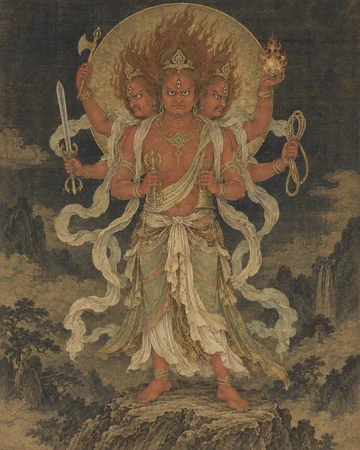
Sanbō Kōjin is a deity who protects the Three Treasures (the Buddha, the teaching and the community of monks) and is also familiar as a deity of the hearth. Kiyoshi Kōjin Seichō-ji explains that it enshrines Sanbō Kōjin as the guardian deity of its principal object of worship, Dainichi Nyorai.
This introduction is based on materials published by shrines, temples, and schools, starting with Shōhōin. It is summarized within the scope of the beliefs and traditions those materials convey, and does not present explanations or customs common to all schools, shrines, and temples.
English pages are the site’s own translations of its Japanese pages. The sources cited are in Japanese. 日本語で読む
Protecting the Three Treasures and the hearth
Sanbō Kōjin is a deity who protects the Three Treasures (the Buddha, the teaching and the community of monks) and is also familiar as a deity of the hearth. Kiyoshi Kōjin Seichō-ji explains that it enshrines Sanbō Kōjin as the guardian deity of its principal object of worship, Dainichi Nyorai.
Source: 飛不動尊 正宝院・清荒神清澄寺
Supporting food, and wishing for a peaceful life
A belief that sees fire as a pure power came to be joined with prayers at the hearth. At Seichō-ji's spring grand festival, many vegetables and fruits are offered, and prayers are made for world peace and abundant harvests of the five grains. It is an event that wishes for both daily food and the peace of society.
Source: 飛不動尊 正宝院・清荒神清澄寺
Protecting fire and the kitchen, and wishing for household safety
Kiyoshi Kōjin Seichō-ji regards the kitchen, where fire is used, as the center of the home and of work, and introduces the faith of praying to Kōjin for household safety, prosperous business, and protection from misfortune and good fortune. Together with the work of protecting the Three Treasures, it is a faith that turns the heart toward the fire that supports each day's meals and toward safety in daily life.
Source: 清荒神清澄寺・清荒神清澄寺
Mantra (in Japanese, as written in the sources)
おん けんばやけんばや そわか。
Source: 飛不動尊 正宝院
Shown as written in the Japanese sources. This site does not set how or how many times to recite it.
Related shrines and temples
Related kami and buddhas
Sources (in Japanese)
- 飛不動尊 正宝院「仏様の世界:三宝荒神」(2026-10-14 確認)
- 飛不動尊 正宝院「仏様の世界:目次」(2026-10-14 確認)
- 清荒神清澄寺「よくあるご質問」(2026-10-15 確認)
- 清荒神清澄寺「春季三宝荒神大祭」(2026-10-15 確認)
- 清荒神清澄寺「清荒神清澄寺について」(2026-10-17 確認)