
Wisdom King (myōō)
Kurikara Fudō
倶利伽羅不動
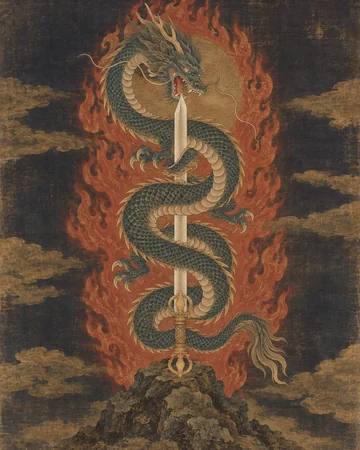
Kurikara Fudō expresses the work of Fudō Myōō in the form of a dragon coiled around a sword. The Nara National Museum explains Kurikara Ryūō as a transformation body of Fudō Myōō. It is an expression that shows a buddha's power not only in human form but through a dragon and a ritual implement.
This introduction is based on materials published by shrines, temples, and schools, starting with Shōhōin. It is summarized within the scope of the beliefs and traditions those materials convey, and does not present explanations or customs common to all schools, shrines, and temples.
English pages are the site’s own translations of its Japanese pages. The sources cited are in Japanese. 日本語で読む
The work of Fudō Myōō, expressed through a dragon and a sword
Kurikara Fudō expresses the work of Fudō Myōō in the form of a dragon coiled around a sword. The Nara National Museum explains Kurikara Ryūō as a transformation body of Fudō Myōō. It is an expression that shows a buddha's power not only in human form but through a dragon and a ritual implement.
Source: 奈良国立博物館
A sword standing on a rock, and a dragon swallowing its tip
Shōhōin's iconographic notes introduce the form of a dragon coiled around a sword standing on a great rock, about to swallow the sword's tip. The sword relates to Fudō's sword that cuts through delusion, and the dragon is not a separate being apart from Fudō but a form that conveys Fudō's work.
Source: 飛不動尊 正宝院・奈良国立博物館
Praying to ward off misfortune and for safety in daily life
Kurikara Fudō-ji explains that at its goma fire rite, which prays to the flame of Fudō Myōō's wisdom, people pray for things such as household safety, prosperous business, traffic safety, and good fortune and protection from misfortune. It is one example of a temple that links faith in the form of a dragon coiled around a sword with wishes for the protection of daily life.
Source: 倶利迦羅不動寺
Mantra (in Japanese, as written in the sources)
なまさまんだ ばさらなん くりきゃや きゃあらじゃめいきゃ せんちえい そわか。
Source: 飛不動尊 正宝院
Shown as written in the Japanese sources. This site does not set how or how many times to recite it.
Sources (in Japanese)
- 飛不動尊 正宝院「仏様の世界:倶利伽羅不動」(2026-10-14 確認)
- 飛不動尊 正宝院「仏様の世界:目次」(2026-10-14 確認)
- 奈良国立博物館「両界曼荼羅・倶利迦羅龍剣二童子像」(2026-10-15 確認)
- 倶利迦羅不動寺「ご祈祷・ご供養」(2026-10-17 確認)