
Disciple or founding teacher
Makakashō
摩訶迦葉
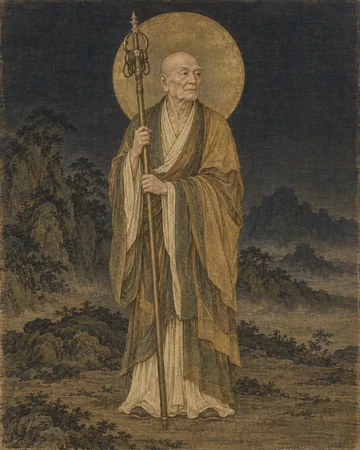
One of the Ten Great Disciples, called "foremost in zuda" and also known as Daikashō. The Ten Great Disciples are those among Shaka's disciples who are regarded as having excelled in fields such as wisdom, preaching and the precepts.
This introduction is based on materials from Shōhōin (Tobi Fudō). It is summarized within the scope of the beliefs and traditions those materials convey, and does not present explanations or customs common to all schools, shrines, and temples.
English pages are the site’s own translations of its Japanese pages. The sources cited are in Japanese. 日本語で読む
The name and role of Makakashō
One of the Ten Great Disciples, called "foremost in zuda" and also known as Daikashō. Zuda means practicing purely without attachment to clothing, food or shelter, and he is introduced as having taken a leading role in the order after Shaka's death.
Source: 飛不動尊 正宝院・飛不動尊 正宝院・飛不動尊 正宝院
Tracing the form and traditions
It is said that he decided to leave home after seeing insects turned up from the soil during farm work being eaten by birds and feeling the sin of taking life. He is said to have already possessed seven of the thirty-two marks when he became a disciple and to have become an arakan on the eighth day; it is also noted that accounts of his early life differ between the southern and northern transmissions.
Source: 飛不動尊 正宝院・飛不動尊 正宝院・飛不動尊 正宝院
People who learned the teaching and passed it on
The Ten Great Disciples are those among Shaka's disciples who are regarded as having excelled in fields such as wisdom, preaching and the precepts. The practice or work in which each excelled is expressed in the title "foremost" (daiichi).
Source: 飛不動尊 正宝院
Until the sutras were handed down
After Shaka's death, the disciples are said to have held a council (ketsujū) to gather and confirm the teachings. A Sōtō school explanation says that Makakashō led the assembly, Ānan recited the teachings, Upari recited the precepts, and the other disciples checked them.
Source: 曹洞宗
Related kami and buddhas
Sources (in Japanese)
- 飛不動尊 正宝院「仏様の世界:摩訶迦葉」(2026-10-14 確認)
- 飛不動尊 正宝院「仏様の世界:目次」(2026-10-14 確認)
- 飛不動尊 正宝院「仏様の世界:十大弟子」(2026-10-14 確認)
- 曹洞宗「経典」(2026-10-15 確認)