
Kami of the Kojiki
Masakatsu Akatsu Kachihayahi Ame no Oshihomimi no Mikoto
正勝吾勝々速日天之忍穂耳命
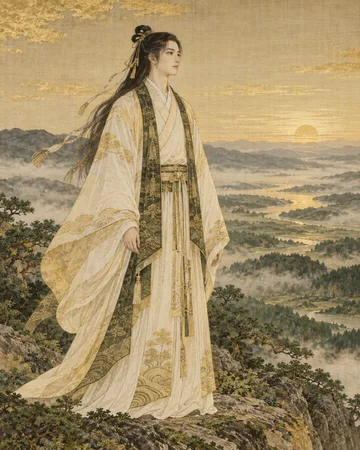
One of the five male kami born from the ukei (pledge) between Amaterasu Ōmikami and Susanoo no Mikoto. He was ordered to rule Ashihara no Nakatsukuni, but it is told that he looked from the Floating Bridge of Heaven (Ame no Ukihashi), saw how restless the land below was, and turned back. After the transfer of the land, he asked that his son Ninigi no Mikoto, born while the descent was being prepared, be sent down in his place. It is also recorded that he fathered Ame no Hoakari no Mikoto and Ninigi no Mikoto with Yorozuhata Toyoakitsushihime no Mikoto.
This page introduces the name and the story recorded in the Kojiki.
English pages are the site’s own translations of its Japanese pages. The sources cited are in Japanese. 日本語で読む
Story and genealogy in the Kojiki
One of the five male kami born from the ukei (pledge) between Amaterasu Ōmikami and Susanoo no Mikoto. He was ordered to rule Ashihara no Nakatsukuni, but it is told that he looked from the Floating Bridge of Heaven (Ame no Ukihashi), saw how restless the land below was, and turned back. After the transfer of the land, he asked that his son Ninigi no Mikoto, born while the descent was being prepared, be sent down in his place. It is also recorded that he fathered Ame no Hoakari no Mikoto and Ninigi no Mikoto with Yorozuhata Toyoakitsushihime no Mikoto.
Source: 國學院大學・青空文庫/武田祐吉校訂・青空文庫/武田祐吉校訂・青空文庫/武田祐吉校訂・國學院大學
Names and how they are recorded
Also recorded under the alternative name 正勝吾勝々速日天忍穂耳命 (Masakatsu Akatsu Kachihayahi Ame no Oshihomimi no Mikoto).
Source: 國學院大學
Scenes in the text
Appears in the Kojiki in “Ukei” (first volume), “The Pacification of Ashihara no Nakatsukuni” (first volume), and “The Descent of the Heavenly Grandchild” (first volume). You can trace the relevant passages of the text through the sources below.
Source: 國學院大學・青空文庫/武田祐吉校訂・青空文庫/武田祐吉校訂・青空文庫/武田祐吉校訂・國學院大學
An example of a chant (in Japanese)
祓え給い、清め給え、神(かむ)ながら守り給い、幸(さきわ)え給え
Related shrines and temples
Sources (in Japanese)
- 國學院大學「古事記ビューアー・神名データベース「正勝吾勝々速日天之忍穂耳命」」(2026-10-15 確認)
- 青空文庫/武田祐吉校訂「校註 古事記 〔誓約〕」(2026-10-15 確認)
- 青空文庫/武田祐吉校訂「校註 古事記 〔天若日子〕」(2026-10-15 確認)
- 青空文庫/武田祐吉校訂「校註 古事記 〔天降〕」(2026-10-15 確認)
- 國學院大學「古事記ビューアー うけひ」(2026-10-15 確認)