
Kami (Shinto deity)
Ōtonobe no Kami
大斗乃弁神
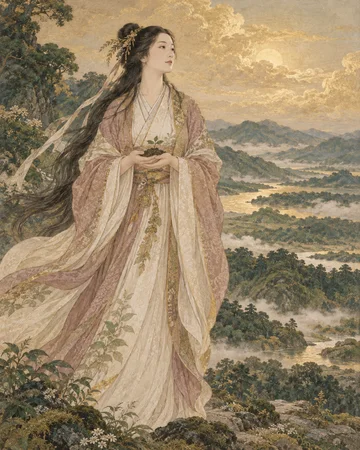
In the Kojiki, Ōtonobe appears as a pair with Ōtonoji no Kami, and is placed in the fifth generation of the Kamiyo Nanayo (seven generations of the age of the kami). Ōtonobe is one of the paired kami who follow the two hitorigami (single kami), Kuni no Tokotachi no Kami and Toyokumono no Kami.
What is recorded in the Kojiki and scholarly views on the kami's name are introduced separately. The page introduces the relationships recorded in the Kojiki and explanations concerning the name.
English pages are the site’s own translations of its Japanese pages. The sources cited are in Japanese. 日本語で読む
Place in the Kojiki
In the Kojiki, Ōtonobe appears as a pair with Ōtonoji no Kami, and is placed in the fifth generation of the Kamiyo Nanayo (seven generations of the age of the kami). Ōtonobe is one of the paired kami who follow the two hitorigami (single kami), Kuni no Tokotachi no Kami and Toyokumono no Kami.
Source: 國學院大學
What the text records
The Kamiyo Nanayo count each of the first two kami as one generation, and each of the five pairs that follow as one generation. Seven generations does not mean seven kami; there are twelve kami in all. There is no tale in this section telling of Ōtonobe no Kami's individual actions or words.
Source: 國學院大學
How to receive the name
Although written differently from Ōtonoji no Kami, the name is discussed as a corresponding name. There are scholarly theories relating it to dwelling places and the formation of the land, the formation of male and female bodies and so on, and we do not treat any one particular theory as its only role.
Source: 國學院大學
An example of a chant (in Japanese)
祓え給い、清め給え、神(かむ)ながら守り給い、幸(さきわ)え給え
Related kami and buddhas
Sources (in Japanese)
- 國學院大學「『古事記』上巻・神世七代(校訂本文)」(2026-10-15 確認)
- 國學院大學「神名データベース「大斗乃弁神」」(2026-10-15 確認)
- 國學院大學「古事記ビューアー・神名データベース「大斗乃弁神」」(2026-10-15 確認)