
Kami (Shinto deity)
Sokotsuwatatsumi no Kami
底津綿津見神
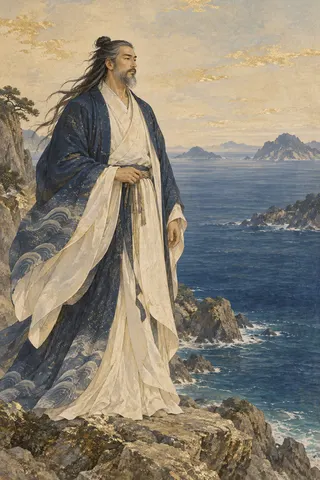
In the Kojiki, Sokotsuwatatsumi is the kami born when Izanagi no Kami rinses himself at the bottom of the water. Three kami, Sokotsuwatatsumi no Kami, Nakatsuwatatsumi no Kami and Uetsuwatatsumi no Kami, appear in the scene of purification.
This page introduces the myths told in the classics and the faith handed down in various places, with their sources. It does not guarantee that any particular wish will be fulfilled.
English pages are the site’s own translations of its Japanese pages. The sources cited are in Japanese. 日本語で読む
What kind of kami
In the Kojiki, Sokotsuwatatsumi is the kami born when Izanagi no Kami rinses himself at the bottom of the water. Three kami, Sokotsuwatatsumi no Kami, Nakatsuwatatsumi no Kami and Uetsuwatatsumi no Kami, appear in the scene of purification.
Source: 國學院大學
What the myths hand down
The Watatsumi Sanshin (three kami of Watatsumi) appear in the scene of purification alongside the Sumiyoshi Sanshin. There are also other kami with the name “Watatsumi,” such as the kami of the palace of the sea kami and Ōwatatsumi no Kami, and we do not combine all those with the same or similar names into a single kami.
Source: 國學院大學
Links between the sources and faith
The Kojiki relates that these three are the kami whom the Azumi no Muraji enshrine as their ancestral kami. Kokugakuin University's explanation introduces the rites of a clan connected with the sea and how they spread.
Source: 國學院大學
An example of a chant (in Japanese)
祓え給い、清め給え、神(かむ)ながら守り給い、幸(さきわ)え給え
Related shrines and temples
Related kami and buddhas
Sources (in Japanese)
- 國學院大學「古事記ビューアー・神名データベース「底津綿津見神」」(2026-10-15 確認)
- 國學院大學「古事記ビューアー・神名データベース「底津綿津見神」」(2026-10-15 確認)