
Deity of shinbutsu shūgō (kami–buddha syncretism)
Hachiman Daibosatsu
八幡大菩薩
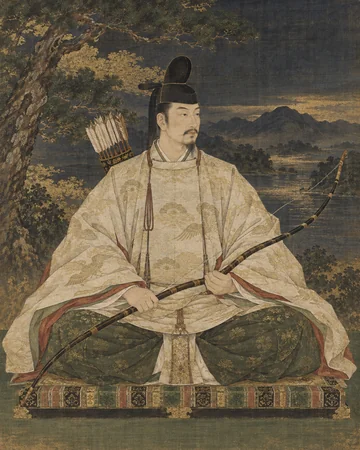
Iwashimizu Hachimangū enshrines Emperor Ōjin (Hondawake no Mikoto), Hime Ōkami and Empress Jingū. That Hachiman is called "Daibosatsu," great bodhisattva, reflects the history of faith in which kami and buddhas were joined. Hachiman Daibosatsu of the Thirty Guardian Kami corresponds to the faith of Iwashimizu.
This introduction is based on materials published by shrines, temples, and schools, starting with Shōhōin. It is summarized within the scope of the beliefs and traditions those materials convey, and does not present explanations or customs common to all schools, shrines, and temples.
English pages are the site’s own translations of its Japanese pages. The sources cited are in Japanese. 日本語で読む
Hachiman Ōkami and faith that protects the nation
Iwashimizu Hachimangū enshrines Emperor Ōjin (Hondawake no Mikoto), Hime Ōkami and Empress Jingū. That Hachiman is called "Daibosatsu," great bodhisattva, reflects the history of faith in which kami and buddhas were joined. Hachiman Daibosatsu of the Thirty Guardian Kami corresponds to the faith of Iwashimizu.
Source: 石清水八幡宮・日蓮宗 光瑞山本立寺
From Usa to Otokoyama — the origin story of the priest Gyōkyō
The history of Iwashimizu Hachimangū relates as its founding that in 859 the priest Gyōkyō, while praying at Usa, received an oracle from Hachiman Ōkami saying that it would move to Otokoyama, near the capital, and protect the country. It is a story that shows not only the image of a kami of warriors but also the breadth of faith that protects the capital and its people.
Source: 石清水八幡宮
Faith in the Thirty Guardian Kami, who protect in turn one day at a time
The Thirty Guardian Kami (Sanjū Banjin) are a faith of kami-buddha syncretism in which thirty kami divide the days among themselves to protect the country and the Buddha's teaching. In Shōhōin's list, each kami is assigned one of the days from the 1st to the 30th. It is a grouping handed down in the Tendai and Nichiren traditions and others, and the modern explanations of the enshrined kami at shrines of the same name need to be distinguished from historical theories of honjibutsu.
Source: 飛不動尊 正宝院
Kami who come to hear sutra recitation — the origin story told by Shinjō-ji
Shinjō-ji, a Nichiren Shū temple, introduces a tradition that while Nichiren Shōnin was reading the Lotus Sutra on Mount Hiei, a different person visited him each day and revealed himself as one of the Thirty Guardian Kami. This is the origin story of "the Thirty Guardian Kami who protect the Lotus Sutra" that the temple teaches. It is not treated as a historical event common to all faith in the Thirty Guardian Kami.
Source: 日蓮宗 玉蓮山真成寺
Protection in turn that supports daily faith
Shinjō-ji introduces the Thirty Guardian Kami as guardian deities of kami-buddha syncretism who divide their duty day by day. What the temple holds dear is the faith that they protect the Lotus Sutra and those who believe in its teachings. This explanation is for learning their role as the Thirty Guardian Kami, in addition to the divine virtues handed down at each shrine.
Source: 日蓮宗 玉蓮山真成寺
Related kami and buddhas
Sources (in Japanese)
- 飛不動尊 正宝院「仏様の世界:八幡大菩薩」(2026-10-14 確認)
- 飛不動尊 正宝院「仏様の世界:目次」(2026-10-14 確認)
- 石清水八幡宮「石清水八幡宮について」(2026-10-15 確認)
- 日蓮宗 光瑞山本立寺「三十番神堂」(2026-10-15 確認)
- 飛不動尊 正宝院「仏様の世界:三十番神」(2026-10-14 確認)
- 日蓮宗 玉蓮山真成寺「三十番神様」(2026-10-15 確認)