
Buddha (nyorai)
Kaifukeō Nyorai
開敷華王如来
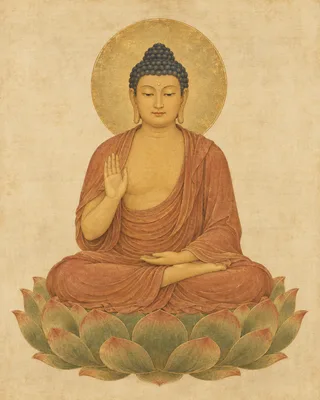
Kaifukeō Nyorai is the buddha placed in the south of the Chūdai Hachiyōin. Keio University's explanation also shows Kaifukeō as one of the four buddhas surrounding Dainichi Nyorai.
This introduces the figure's place in the Chūdai Hachiyō-in of the Womb Realm (Taizō) mandala and the explanation published by Yasuraka-an. It describes religious meaning; it does not determine the outcome of prayers or the customs of all schools.
English pages are the site’s own translations of its Japanese pages. The sources cited are in Japanese. 日本語で読む
The buddha of the south in the Chūdai Hachiyōin
Kaifukeō Nyorai is the buddha placed in the south of the Chūdai Hachiyōin. Keio University's explanation also shows Kaifukeō as one of the four buddhas surrounding Dainichi Nyorai.
Source: 慶應義塾 Keio Object Hub
The meaning held in this faith
Yasuraka-an explains the meaning as bodaishin, the mind that seeks awakening, growing like a lotus flower opening, and putting compassion into practice for the sake of others. The semui-in is introduced as a mudra that expresses the removal of fear and encourages those walking the Buddhist path.
Source: 高野山真言宗 やすらか庵
A form based on the sources
Drawn with reference to the type in the form of a buddha without ornaments, seated on a lotus pedestal with the right hand raised in the semui-in. The facial features, the color of the robes, the halo and the details of the lotus pedestal are the artist's own creation.
Source: 高野山真言宗 やすらか庵
Following the connection with Hōshō Nyorai of the Kongōkai
Shōhōin introduces a view that Hōshō Nyorai of the Kongōkai (Diamond Realm) and Kaifukeō Nyorai are the same buddha. This is one way of understanding the buddhas of the two realms by linking them. Here, the introduction of Kaifukeō Nyorai of the Taizōkai (Womb Realm) and that of Hōshō Nyorai of the Kongōkai can each be read on its own.
Source: 飛不動尊 正宝院・高野山真言宗 やすらか庵
Mantra (in Japanese, as written in the sources)
ナウ マク サ マ ンダ ボ ダ ナン・バン バク ソワ カ
Source: 高野山真言宗 やすらか庵
Shown as written in the Japanese sources. This site does not set how or how many times to recite it.
Related kami and buddhas
Sources (in Japanese)
- 慶應義塾 Keio Object Hub「刺繍仏種子曼荼羅」(2026-10-15 確認)
- 高野山真言宗 やすらか庵「開敷華王如来」(2026-10-15 確認)
- 飛不動尊 正宝院「仏様の世界:宝生如来」(2026-10-14 確認)