
Deva (ten) or guardian deity
Seiryū Gongen
青龍権現(清瀧権現)
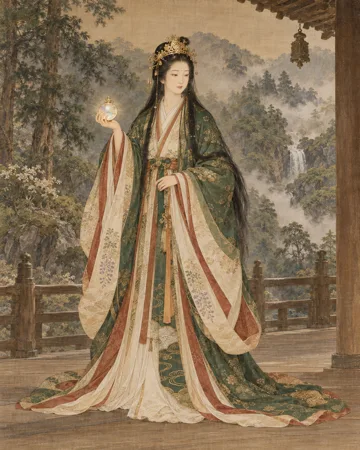
Seiryū Gongen, also written 清瀧権現 or 清滝権現, has been worshipped as a guardian deity at temples of Shingon esoteric Buddhism. At Daigo-ji, the deity is enshrined in the Seiryūgū as the chief guardian (sōchinju) protecting the whole temple.
This page introduces faith in this deity as a guardian of Shingon esoteric Buddhism. The name contains "blue-green dragon" (seiryū), but the form handed down is that of a goddess wearing court robes and holding a jewel.
English pages are the site’s own translations of its Japanese pages. The sources cited are in Japanese. 日本語で読む
Protecting the temple and the Buddha's teaching
“Chinju” refers to a kami who protects a temple or its land. Seiryū Gongen of Daigo-ji is cherished as the chief guardian. It can also be an entry point to learning how faith in Buddhism and faith in the kami have been joined together.
Source: 総本山 醍醐寺
A founding legend of arrival from Tang China
The commentary of the Hatakeyama Museum introduces a tradition that the deity came to Japan from Seiryū-ji in Tang China together with Kūkai on his return, and became the guardian deity of Daigo-ji. Please read this as a founding legend that tells the origins of the guardian deity.
Source: 荏原 畠山美術館
A goddess holding a jewel
Images of Seiryū Gongen that have come down include the figure of a goddess holding a jewel (hōju) in her right hand. This site also draws on the goddess type. The museum's commentary also introduces a relationship in which Nyoirin Kannon is the honji. “Honji” is the idea of seeking the original form of a kami in a buddha.
Source: 荏原 畠山美術館
About the go-ennichi on the 17th
The 17th of each month is an assignment based on the entry “Seiryū Gongen” in the monthly table published by Shōhōin (Tobi Fudō). It does not indicate the schedule of services at Daigo-ji. That temple separately announces the Seiryū Gongen Sakura-e. A common set time for praying at home has not been confirmed in the published materials.
Source: 飛不動尊 正宝院・総本山 醍醐寺
Related shrines and temples
Related kami and buddhas
Sources (in Japanese)
- 総本山 醍醐寺「境内のご案内・霊宝館」(2026-10-18 確認)
- 荏原 畠山美術館「清滝権現像」(2026-10-18 確認)
- 飛不動尊 正宝院「縁日・三十日秘仏」(2026-10-16 確認)