
Deva (ten) or guardian deity
Rasetsuten
羅刹天
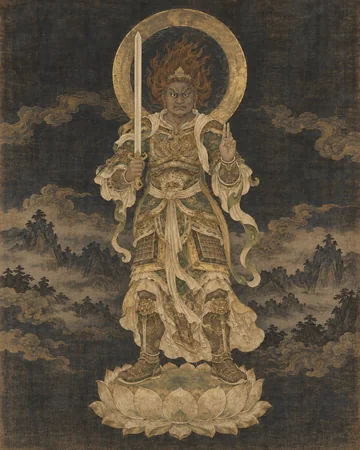
A deity in charge of the southwest among the Twelve Heavenly Deities (Jūniten).
This introduction is based on materials from Shōhōin (Tobi Fudō). It is summarized within the scope of the beliefs and traditions those materials convey, and does not present explanations or customs common to all schools, shrines, and temples.
English pages are the site’s own translations of its Japanese pages. The sources cited are in Japanese. 日本語で読む
The name and role of Rasetsuten
A deity in charge of the southwest among the Twelve Heavenly Deities. It is described as the lord of the rasetsu, who were regarded in ancient India as representative demons, and as also being called Neiriti-ō. The rasetsu are said to be divided into male and female and into three types.
Source: 飛不動尊 正宝院・飛不動尊 正宝院・飛不動尊 正宝院
Tracing the form and traditions
It is said to wear armor and hold a sword, with one hand forming the sword mudra (tōin). It is introduced that the Kannon Sutra has a story that even if people drift ashore on an island of rasetsu, all can return home if even one of them prays to Kannon, and that in the Konjaku Monogatari it grows into a story of rasetsu women and merchants.
Source: 飛不動尊 正宝院・飛不動尊 正宝院・飛不動尊 正宝院
Deities who guard the directions, heaven and earth, and the sun and moon
The Twelve Heavenly Deities are guardian deities related to the eight directions (east, west, south, north and the four corners), above and below, the sun and the moon. They consist of Taishakuten, Katen, Enmaten, Rasetsuten, Suiten, Fūten, Tamonten and Ishanaten, together with Bonten, Jiten, Nitten and Gatten. It is a grouping that welcomes deities who protect nature and space into Buddhist ritual.
Source: 飛不動尊 正宝院
Guarding the ritual space, and prayers to remove calamity
Shōhōin connects the Twelve Heavenly Deities with harmony with nature and prayers to drive away calamity, and explains them as beings who guard the place of the denpō kanjō (transmission consecration). The direction and attributes of each deity belong to this system of protection. It is a grouping separate from the classifications of Shinto kami and from the twelve Western zodiac signs.
Source: 飛不動尊 正宝院
Mantra (in Japanese, as written in the sources)
おん あらきしゃ さぢはたや そわか。
Source: 飛不動尊 正宝院
Shown as written in the Japanese sources. This site does not set how or how many times to recite it.