
Deva (ten) or guardian deity
Daikokuten
大黒天
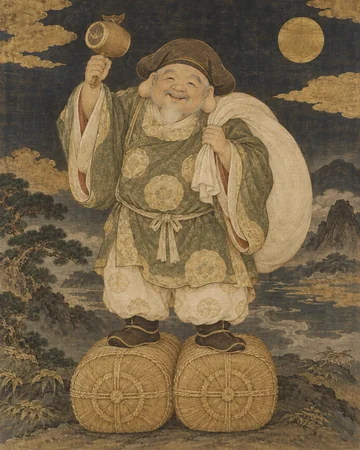
In Daikokuten, the character of a deity who protects Buddhism overlaps with faith in him as guardian of dining halls and kitchens and as a bringer of wealth and good fortune. In Japan, because "Daikoku" (大黒) and "Daikoku" (大国) sound alike, he also became linked with Ōkuninushi no Mikoto, and came to be cherished as one of the Seven Lucky Gods.
This introduction is based on materials published by shrines, temples, and schools, starting with Shōhōin. It is summarized within the scope of the beliefs and traditions those materials convey, and does not present explanations or customs common to all schools, shrines, and temples.
English pages are the site’s own translations of its Japanese pages. The sources cited are in Japanese. 日本語で読む
Daikokuten, who protects the teachings and food and brings good fortune
In Daikokuten, the character of a deity who protects Buddhism overlaps with faith in him as guardian of dining halls and kitchens and as a bringer of wealth and good fortune. In Japan, because "Daikoku" (大黒) and "Daikoku" (大国) sound alike, he also became linked with Ōkuninushi no Mikoto, and came to be cherished as one of the Seven Lucky Gods.
Source: 飛不動尊 正宝院・天台宗
Abundant food, and good fortune in daily life
Shōhōin introduces a form of Daikokuten standing on rice bales, holding a sack and a small mallet. Faith that prays for the blessings of food and wealth is also expressed in the objects he holds. On the other hand, there are also older, stern forms and three-faced forms, and the smiling image of a god of fortune is not the whole of Daikokuten.
Source: 飛不動尊 正宝院・飛不動尊 正宝院
Prosperity in business, good fortune, and the blessings that sustain food
Matsugasaki Daikokuten (Myōenji) in Kyoto hands down a faith in which people pray to Daikokuten for prosperity in business, improved fortune, and happiness in daily life. His character as protector of food and the kitchen also overlaps with this, and it is introduced not only as a wish for wealth, but as a wish that people may live in peace without lacking food.
Source: 松ヶ崎大黒天 妙円寺
An image that escaped fire, and faith in protection from fire
Myōenji relates that when the temple burned down in a fire in 1969, the image of Daikokuten escaped harm. Based on this event, people at the temple also came to pray for protection from fire. This is not a history shared by all temples that enshrine Daikokuten, but one example of the faith handed down at Matsugasaki.
Source: 松ヶ崎大黒天 妙円寺
Mantra (in Japanese, as written in the sources)
おん まかきゃらや そわか
Source: 飛不動尊 正宝院
Shown as written in the Japanese sources. This site does not set how or how many times to recite it.