
Kami (Shinto deity)
Ōkuninushi no Ōkami
大国主大神
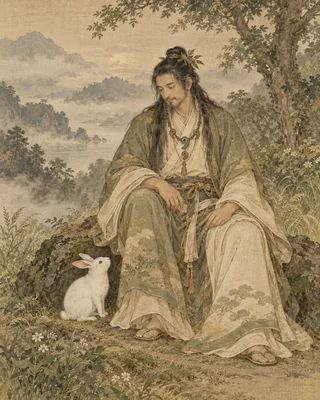
Izumo Ōyashiro introduces Ōkuninushi no Ōkami as a kami associated with developing the land and with the wisdom that supports people's lives. Divine virtues that support many areas of activity, such as farming, fishing, industry, and medicine, have been handed down.
This page introduces myths and the faith handed down at individual shrines, with their sources. Descriptions of divine virtues are explanations within religious faith and do not guarantee the outcome of any prayer. We do not set uniform rules for the traditions or customs of individual shrines and temples.
English pages are the site’s own translations of its Japanese pages. The sources cited are in Japanese. 日本語で読む
The kami who takes on the making of the land
Izumo Ōyashiro introduces Ōkuninushi no Ōkami as a kami associated with developing the land and with the wisdom that supports people's lives. Divine virtues that support many areas of activity, such as farming, fishing, industry, and medicine, have been handed down.
Source: 出雲大社
Bonds that connect people and daily life
The en-musubi (forming of bonds) spoken of by Izumo Ōyashiro is not limited to bonds between men and women; it includes the ties that allow living beings to live richly together. Rather than narrowing him to a kami in charge of romance alone, we introduce this as faith concerning the many kinds of bonds in life.
Source: 出雲大社
The White Hare of Inaba and the ceding of the land
He is known for the story of the White Hare of Inaba, in which he helps an injured hare. The tradition of the ceding of the land (kuniyuzuri), in which he hands over the land he had built to the side of Amaterasu Ōmikami and himself takes charge of the unseen world, is also cherished and told at Izumo Ōyashiro.
Source: 出雲大社・出雲大社
Faith linked with Daikokuten
A Tendai school sermon on the Seven Lucky Gods explains that faith in Ōkuninushi and faith in Daikokuten became linked through the connection in sound between "大国" (as in Ōkuninushi) and "大黒" (as in Daikokuten). Ōkuninushi, who takes on the making of the land in myth, and Daikokuten, a guardian deity of Buddhism, each have their own origins, yet they have come to be overlaid on each other within Japanese faith in deities of good fortune.
Source: 飛不動尊 正宝院・天台宗
An example of a chant (in Japanese)
祓え給い、清め給え、神(かむ)ながら守り給い、幸(さきわ)え給え
Related shrines and temples
- Hokkaidō JingūSapporo, Hokkaido
- Taiheizan Miyoshi JinjaAkita, Akita Prefecture
- Nikkō Futarasan JinjaNikkō, Tochigi Prefecture
- Musashi Ichinomiya Hikawa JinjaSaitama, Saitama Prefecture
- Hiyoshi TaishaŌtsu, Shiga Prefecture
- Izumo TaishaIzumo, Shimane Prefecture
- Kanda MyōjinChiyoda, Tokyo
- Nishinomiya JinjaNishinomiya, Hyōgo Prefecture
- Izumo DaijingūKameoka, Kyoto Prefecture
- Takebe TaishaŌtsu, Shiga Prefecture
- Keta JinjaTakaoka, Toyama Prefecture
- Kangō JinjaNara, Nara Prefecture
- Sakatsura Isosaki JinjaHitachinaka, Ibaraki Prefecture
- Ōarai Isosaki JinjaŌarai, Ibaraki Prefecture
- Ōkunitama JinjaIwaki, Fukushima Prefecture
- Jūzō JinjaWajima, Ishikawa Prefecture
- Tsuno JinjaTsuno, Koyu District, Miyazaki Prefecture
- Namura JinjaRyūō, Gamō District, Shiga Prefecture
- Ōgamiyama JinjaYonago, Tottori Prefecture
- Keta TaishaHakui, Ishikawa Prefecture
- Takase JinjaNanto, Toyama Prefecture
- Toga JinjaToyokawa, Aichi Prefecture
- Sakisaki JinjaAnnaka, Gunma Prefecture
- Wakamatsu Ebisu JinjaWakamatsu Ward, Kitakyūshū, Fukuoka Prefecture
- Hakusan Jinja (Kuroda, Ichinomiya)Ichinomiya, Aichi Prefecture
- Minakuchi JinjaKōka, Shiga Prefecture
- Tarumi JinjaSuita, Osaka Prefecture
- Yaegaki JinjaMatsue, Shimane Prefecture
- Kanmuri Inari JinjaŌta, Gunma Prefecture
- Tsushima JinjaTsushima, Aichi Prefecture
- Nezu JinjaBunkyō, Tokyo
- Yuki JinjaSakyō, Kyoto
- Yukura JinjaHakodate, Hokkaido
- Kamikawa JinjaAsahikawa, Hokkaido
- Nagayama JinjaAsahikawa, Hokkaido
- Onsen JinjaŌsaki, Miyagi Prefecture
- Sasuke Inari JinjaKamakura, Kanagawa Prefecture
- Kinomiya JinjaAtami, Shizuoka Prefecture
- Kata JinjaToba, Mie Prefecture
- Ōtori JinjaKōka, Shiga Prefecture
- Imamiya JinjaKita, Kyoto, Kyoto Prefecture
- Awata JinjaHigashiyama, Kyoto, Kyoto Prefecture
- Jishu JinjaHigashiyama, Kyoto, Kyoto Prefecture
- Fukushima TenmangūFukushima, Osaka, Osaka Prefecture
- Onaga TenmangūHigashi Ward, Hiroshima, Hiroshima Prefecture
- Fukushima Inari JinjaFukushima, Fukushima Prefecture
- Torinokosanjō JinjaHitachiōmiya, Ibaraki Prefecture
- Nagamiya Hikawa JinjaFujimino, Saitama Prefecture
- Kikuta JinjaNarashino, Chiba Prefecture
- Shirako JinjaShirako, Chōsei District, Chiba Prefecture
- Musashi Mitake JinjaŌme, Tokyo
- Shirahata JinjaFujisawa, Kanagawa Prefecture
- Rokusho JinjaŌiso, Naka District, Kanagawa Prefecture
- Yamaga JinjaUeda, Nagano Prefecture
- Ibun JinjaNishio, Aichi Prefecture
- Ōe JinjaTennōji, Osaka
- Tsuyu no TenjinshaKita, Osaka
- Hijiyama JinjaMinami, Hiroshima
- Obama JinjaUnzen, Nagasaki Prefecture
- JōnangūFushimi, Kyoto
- Kosuge JinjaIiyama, Nagano Prefecture
- Terushima JinjaIchikikushikino, Kagoshima Prefecture
- Haritsuna JinjaInuyama, Aichi Prefecture
- Tōsen JinjaKita, Kobe, Hyōgo Prefecture
Related kami and buddhas
Sources (in Japanese)
- 出雲大社「大国主大神」(2026-10-15 確認)
- 出雲大社「いなばのしろうさぎ」(2026-10-15 確認)
- 國學院大學「古事記ビューアー・神名データベース「葦原色許男神」」(2026-10-15 確認)
- 國學院大學「古事記ビューアー・神名データベース「出雲大神」」(2026-10-15 確認)
- 國學院大學「古事記ビューアー・神名データベース「大穴牟遅神」」(2026-10-15 確認)
- 國學院大學「古事記ビューアー・神名データベース「大国主神」」(2026-10-15 確認)
- 國學院大學「古事記ビューアー・神名データベース「宇都志国玉神」」(2026-10-15 確認)
- 國學院大學「古事記ビューアー・神名データベース「八千矛神」」(2026-10-15 確認)
- 國學院大學「古事記ビューアー・神名データベース「葦原色許男神」」(2026-10-15 確認)
- 國學院大學「古事記ビューアー・神名データベース「出雲大神」」(2026-10-15 確認)
- 國學院大學「古事記ビューアー・神名データベース「宇都志国玉神」」(2026-10-15 確認)
- 國學院大學「古事記ビューアー・神名データベース「大穴牟遅神」」(2026-10-15 確認)
- 國學院大學「古事記ビューアー・神名データベース「大国主神」」(2026-10-15 確認)
- 國學院大學「古事記ビューアー・神名データベース「八千矛神」」(2026-10-15 確認)
- 飛不動尊 正宝院「仏様の世界:六大黒」(2026-10-14 確認)
- 天台宗「法話集:七福神」(2026-10-15 確認)