
Deva (ten) or guardian deity
Seitaka Dōji
制託迦童子
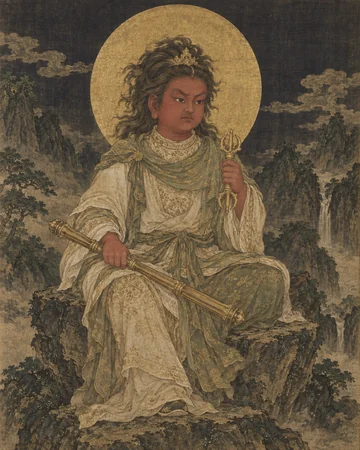
Seitaka Dōji is one of the Eight Great Dōji, listed as a representative dōji among the messengers of Fudō Myōō. The Eight Great Dōji are a group of attendants (kenzoku) who follow Fudō Myōō.
This introduction is based on materials from Shōhōin (Tobi Fudō). It is summarized within the scope of the beliefs and traditions those materials convey, and does not present explanations or customs common to all schools, shrines, and temples.
English pages are the site’s own translations of its Japanese pages. The sources cited are in Japanese. 日本語で読む
The name and role of Seitaka Dōji
Seitaka Dōji is one of the Eight Great Dōji, listed as a representative dōji among the messengers of Fudō Myōō. He is usually paired with Kongara Dōji, and the original buddha is said to be Miroku Bosatsu.
Source: 飛不動尊 正宝院・飛不動尊 正宝院
Tracing the form and traditions
He is generally said to be crimson-lotus in color, with a more fearsome face than Kongara Dōji. He is described as holding a three-pronged vajra (sankosho) in the left hand and a vajra staff (kongōbō) in the right, and sometimes riding a white horse.
Source: 飛不動尊 正宝院・飛不動尊 正宝院
Eight dōji who serve Fudō Myōō
The Eight Great Dōji are a group of attendants who follow Fudō Myōō. Shōhōin lists eight: Ekō, Eki, Anokuta, Shitoku, Ukubaga, Shōjō Biku, Kongara, and Seitaka. The explanations of each dōji's form and original buddha are based on that iconographic tradition.
Source: 飛不動尊 正宝院
Statues of the Eight Great Dōji handed down on Kōyasan
The Kōyasan Reihōkan introduces statues of the Eight Great Dōji handed down at Kongōbuji. The dōji depicted in paintings and sculpture show that faith in the attendants who assist Fudō's salvation has been passed down in many different forms.
Source: 高野山霊宝館
Mantra (in Japanese, as written in the sources)
おん げるま せいたか うんぱったなん。
Source: 飛不動尊 正宝院
Shown as written in the Japanese sources. This site does not set how or how many times to recite it.
Related kami and buddhas
Sources (in Japanese)
- 飛不動尊 正宝院「仏様の世界:制託迦童子」(2026-10-14 確認)
- 飛不動尊 正宝院「仏様の世界:目次」(2026-10-14 確認)
- 飛不動尊 正宝院「仏様の世界:八大童子」(2026-10-14 確認)
- 高野山霊宝館「第34回高野山大宝蔵展:高野山の名宝」(2026-10-15 確認)