
Kannon (bodhisattva)
Fukūkenjaku Kannon
不空羂索観音
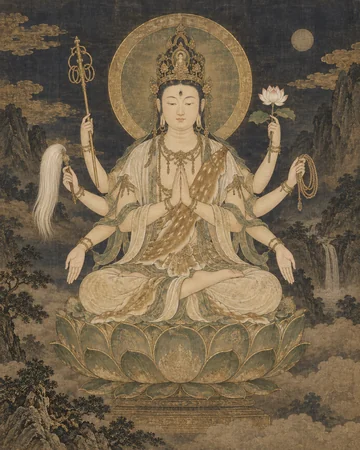
The kenjaku of Fukūkenjaku Kannon refers to a rope fitted with a ring. "Fukū" relates to the work of salvation never ending in vain, and it is worshipped as a Kannon who catches and saves people who suffer. It is depicted with multiple arms and eyes, bearing a kenjaku and other objects.
This introduction is based on materials from Shōhōin (Tobi Fudō). It is summarized within the scope of the beliefs and traditions those materials convey, and does not present explanations or customs common to all schools, shrines, and temples.
English pages are the site’s own translations of its Japanese pages. The sources cited are in Japanese. 日本語で読む
Leaving no one behind, with a rope of salvation
The kenjaku of Fukūkenjaku Kannon refers to a rope fitted with a ring. "Fukū" relates to the work of salvation never ending in vain, and it is worshipped as a Kannon who catches and saves people who suffer. It is depicted with multiple arms and eyes, bearing a kenjaku and other objects.
Source: 飛不動尊 正宝院
The buddha enshrined at the center of the Hokkedō of Tōdai-ji
Because the Hokkedō of Tōdai-ji had Fukūkenjaku Kannon as its principal image, it was originally called the Kenjakudō. The name Hokkedō is said to have come from the Hokke-e held in the third month. The temple introduces its principal image as a Kannon who goes anywhere to save people who are troubled.
Source: 東大寺
Mantra (in Japanese, as written in the sources)
おん はんどまだら あぼきゃ じゃやに そろそろ そわか。
Source: 飛不動尊 正宝院
オン アモキャ ビジャヤ ウン ハッタ
Source: Wikipedia
Shown as written in the Japanese sources. This site does not set how or how many times to recite it.
Related shrines and temples
Related kami and buddhas
Sources (in Japanese)
- 飛不動尊 正宝院「仏様の世界:不空羂索観音」(2026-10-14 確認)
- 飛不動尊 正宝院「仏様の世界:目次」(2026-10-14 確認)
- 東大寺「法華堂(三月堂)」(2026-10-15 確認)
- Wikipedia「不空羂索観音(真言の節)」(2026-10-19 確認)