
Kannon (bodhisattva)
Juntei Kannon
準提観音
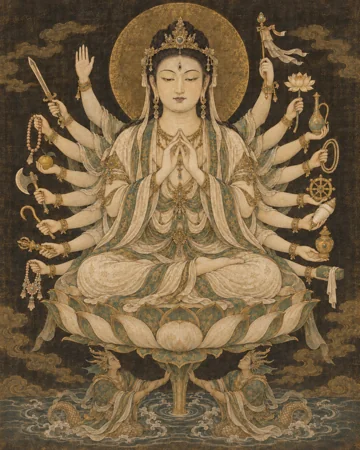
Juntei is a figure whose name is also written 準提, 準胝, and in other ways. Also known by the name Shichikutei Butsumo, Juntei is described as having a working like that of a mother who gives birth to many buddhas. In Japan there is a tradition of counting Juntei as a form of Kannon, and the representative form has three eyes and eighteen arms.
This introduction is based on materials from Shōhōin (Tobi Fudō). It is summarized within the scope of the beliefs and traditions those materials convey, and does not present explanations or customs common to all schools, shrines, and temples.
English pages are the site’s own translations of its Japanese pages. The sources cited are in Japanese. 日本語で読む
Juntei, revered as the mother of the buddhas
Juntei is a figure whose name is also written 準提, 準胝, and in other ways. Also known by the name Shichikutei Butsumo, Juntei is described as having a working like that of a mother who gives birth to many buddhas. In Japan there is a tradition of counting Juntei as a form of Kannon, and the representative form has three eyes and eighteen arms.
Source: 飛不動尊 正宝院
Wishes for children, long life, wisdom, and good relationships
Daigoji introduces a faith in which people pray to Juntei Kannon for things such as being blessed with children, long life, intelligence, mutual respect and affection between spouses and with others, and recovery from illness. Juntei is not a buddha only for those who wish for children; wishes concerning life, daily living, and relationships with others have been widely brought to Juntei.
Source: 総本山 醍醐寺
Many arms, each holding a different object
Images with eighteen arms hold ritual implements, weapons, flowers, and other objects. Shōhōin also explains that the figure is easily mistaken for Senju Kannon, but Juntei has the name Butsumo (mother of buddhas) and its own tradition of form.
Source: 飛不動尊 正宝院・十方禪林
Mantra (in Japanese, as written in the sources)
おん しゃれいしゅれい そんでい そわか。
Source: 飛不動尊 正宝院
Shown as written in the Japanese sources. This site does not set how or how many times to recite it.
Related kami and buddhas
Sources (in Japanese)
- 飛不動尊 正宝院「仏様の世界:準提観音」(2026-10-14 確認)
- 飛不動尊 正宝院「仏様の世界:目次」(2026-10-14 確認)
- 総本山 醍醐寺「准胝観音法要について」(2026-10-15 確認)
- 十方禪林「準提觀音 — 十八臂準提菩薩」(2026-10-15 確認)
- 鹿鳴文庫「仏像図彙:准胝観音」(2026-10-15 確認)
- CBETA 漢文大藏經「佛說七俱胝佛母准提大明陀羅尼經(唐・金剛智訳、T1075)」(2026-10-16 確認)