
Deva (ten) or guardian deity
Daginiten
荼枳尼天
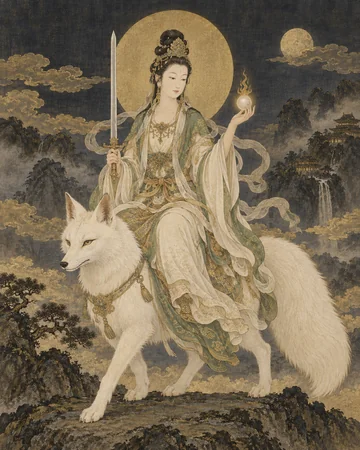
Daginiten is a deity belonging to the tenbu, the devas of Buddhism. In Japan it has been worshipped in forms such as riding a white fox, and it also came to be connected with Inari faith. Toyokawa Inari is a temple of the Sōtō school, and it enshrines Toyokawa Dakini Shinten as its guardian deity.
This introduction is based on materials from Shōhōin (Tobi Fudō). It is summarized within the scope of the beliefs and traditions those materials convey, and does not present explanations or customs common to all schools, shrines, and temples.
English pages are the site’s own translations of its Japanese pages. The sources cited are in Japanese. 日本語で読む
Daginiten, a Dharma-protecting deity of Buddhism
Daginiten is a deity belonging to the tenbu, the devas of Buddhism. In Japan it has been worshipped in forms such as riding a white fox, and it also came to be connected with Inari faith. Toyokawa Inari is a temple of the Sōtō school, and it enshrines Toyokawa Dakini Shinten as its guardian deity.
Source: 飛不動尊 正宝院・豊川稲荷 妙嚴寺
A deity who appeared on board a ship, holding rice ears and a jewel
The temple history of Toyokawa Inari relates that while the Zen master Kangan Giin was at sea returning from Song China, a deity appeared carrying a sheaf of rice on its shoulder, holding a jewel and riding a white fox. After his return he is said to have carved an image of it and enshrined it as a benevolent deity protecting the Dharma, and this faith was later handed down to Myōgon-ji.
Source: 豊川稲荷 妙嚴寺
The popular name "Inari" and the temple's faith
Toyokawa Inari explains that this popular name spread because of the deity's form, accompanied by rice ears and a white fox. The Inari faith in which shrines enshrine kami such as Ukanomitama no Kami, and the faith in the guardian deity of Myōgon-ji, have historical connections but are distinct traditions.
Source: 豊川稲荷 妙嚴寺・伏見稲荷大社
Mantra (in Japanese, as written in the sources)
おん だきに ぎゃちぎゃかねい そわか。
Source: 飛不動尊 正宝院
おん きりかく そわか。
Source: 飛不動尊 正宝院
オン シラ バッタ ニリ ウン ソワカ
Source: Wikipedia
ナウマク サンマンダ ボダナン キリク カク ソワカ
Source: Wikipedia
Shown as written in the Japanese sources. This site does not set how or how many times to recite it.
Related shrines and temples
Related kami and buddhas
Sources (in Japanese)
- 飛不動尊 正宝院「仏様の世界:荼枳尼天」(2026-10-14 確認)
- 飛不動尊 正宝院「仏様の世界:目次」(2026-10-14 確認)
- 豊川稲荷 妙嚴寺「当山の歴史」(2026-10-15 確認)
- 伏見稲荷大社「ご祭神」(2026-10-14 確認)
- 鹿鳴文庫「仏像図彙:荼枳尼天」(2026-10-15 確認)
- Wikipedia「荼枳尼天(真言の節)」(2026-10-19 確認)