
Deva (ten) or guardian deity
Shōten-sama
聖天さま
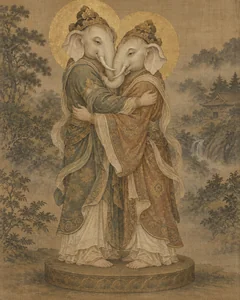
Shōten is a common name for Daishō Kangiten and others. The form of two elephant-headed deities embracing is well known, but it is often cherished as a hidden image, and faith and practice are handed down by each temple. Shōhōin also introduces a relationship with Kannon.
This introduction is based on materials from Shōhōin (Tobi Fudō). It is summarized within the scope of the beliefs and traditions those materials convey, and does not present explanations or customs common to all schools, shrines, and temples.
English pages are the site’s own translations of its Japanese pages. The sources cited are in Japanese. 日本語で読む
A protective deity of good fortune called Kangiten
Shōten is a common name for Daishō Kangiten and others. The form of two elephant-headed deities embracing is well known, but it is often cherished as a hidden image, and faith and practice are handed down by each temple. Shōhōin also introduces a relationship with Kannon.
Source: 飛不動尊 正宝院
Wishes for good health, harmony between husband and wife, and prosperous business
The crests of a daikon radish and a drawstring purse (kinchaku) at Matsuchiyama Shōden are familiar symbols of the faith. A guide from Taitō City links the daikon with good health and harmony between husband and wife, and the purse with wealth and prosperous business. Wishes for daily life are entrusted even to offerings and crests.
Source: 台東区公式観光情報サイト
The form with an elephant's head and a human body, and offerings of daikon
Images of Shōten-sama include single figures with an elephant's head and a human body, and paired figures of two deities embracing. Here the paired form is depicted. The forked daikon is an offering dedicated in the Shōten faith, not the deity's image itself. Many temples enshrine Shōten as a hidden image, and the handling of each temple's image follows its own tradition.
Source: 飛不動尊 正宝院・湯島聖天 心城院・浄土宗
Mantra (in Japanese, as written in the sources)
オンキリギャクウンソワカ
Source: 大峯山護持院 櫻本坊
オンギャクギャクウンソワカ
Source: 大峯山護持院 櫻本坊
Shown as written in the Japanese sources. This site does not set how or how many times to recite it.
Related shrines and temples
Related kami and buddhas
Sources (in Japanese)
- 飛不動尊 正宝院「仏様の世界:聖天さま」(2026-10-14 確認)
- 飛不動尊 正宝院「仏様の世界:目次」(2026-10-14 確認)
- 台東区公式観光情報サイト「待乳山聖天(浅草名所七福神 毘沙門天)」(2026-10-15 確認)
- 湯島聖天 心城院「ご本尊・聖天さま」(2026-10-15 確認)
- 浄土宗「新纂浄土宗大辞典「聖天信仰」」(2026-10-15 確認)
- 大峯山護持院 櫻本坊「吉野聖天尊像」(2026-10-15 確認)