
Kami (Shinto deity)
Ibukidonushi no Kami
気吹戸主神
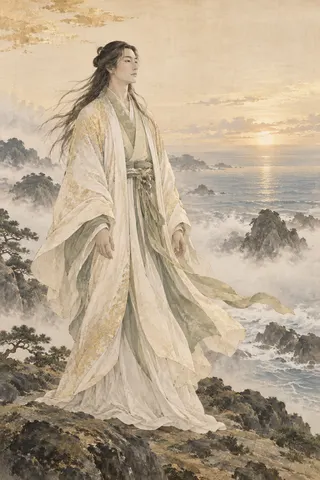
Ibukidonushi is one of the Haraedo Shishin (four kami of Haraedo) and appears in the Ōharae no Kotoba as a kami who dwells at Ibukido. Ibukidonushi is told of as having the role of blowing the sins and impurities received in the sea still farther away.
This page introduces the myths told in the classics and the faith handed down in various places, with their sources. It does not guarantee that any particular wish will be fulfilled.
English pages are the site’s own translations of its Japanese pages. The sources cited are in Japanese. 日本語で読む
One of the Haraedo Shishin
Ibukidonushi is one of the Haraedo Shishin (four kami of Haraedo) and appears in the Ōharae no Kotoba as a kami who dwells at Ibukido. Ibukidonushi is told of as having the role of blowing the sins and impurities received in the sea still farther away.
Source: 遠江國一宮 小國神社
The work depicted in the Ōharae no Kotoba
In the Ōharae no Kotoba, following Hayaakitsuhime no Kami, Ibukidonushi is said to blow them away into Ne no Kuni and Soko no Kuni. Ibukidonushi is placed within a sequence of purification, beyond which Hayasasurahime no Kami purifies them away.
Source: 遠江國一宮 小國神社
Faith in purification
Shide Jinja has Ibukidonushi no Kami as its principal kami and introduces Ibukidonushi as a kami connected with protection from misfortune and with the vitality to live. Ibukidonushi is also enshrined together with the other three kami at Hibiya Jinja and at the Haraenoyashiro of Izumo Taisha.
Source: 日比谷神社・出雲大社・志氐神社
The Ōharae no Kotoba and the Kojiki
The roles of these four kami are drawn from the Ōharae no Kotoba. The kami born in the purification (misogi) in the Kojiki are not simply called the Haraedo Shishin. We also introduce Hayaakitsuhime no Kami (速秋津比売神), who appears in the birth of the kami in the Kojiki, and Hayaakitsuhime no Kami (速開都比売神) of the Ōharae no Kotoba with their writing and sources kept separate.
Source: 遠江國一宮 小國神社・國學院大學・國學院大學
An example of a chant (in Japanese)
祓え給い、清め給え、神(かむ)ながら守り給い、幸(さきわ)え給え
Related shrines and temples
Related kami and buddhas
Sources (in Japanese)
- 遠江國一宮 小國神社「大祓詞」(2026-10-15 確認)
- 日比谷神社「ご祭神」(2026-10-15 確認)
- 出雲大社「祓社本殿遷座祭」(2026-10-15 確認)
- 志氐神社「志氐神社について」(2026-10-15 確認)
- 國學院大學「『古事記』上巻・神生み(校訂本文)」(2026-10-15 確認)
- 國學院大學「『古事記』上巻・みそぎ②(校訂本文)」(2026-10-15 確認)