
Kami of the Kojiki
Kazuraki no Hitokotonushi no Ōkami
葛城之一言主之大神
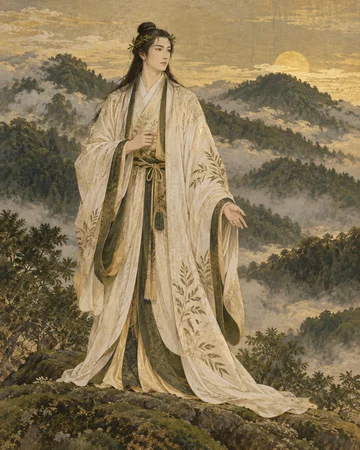
When Emperor Yūryaku made an excursion to Mount Kazuraki, he met a party with the same attire and the same number of people as his own. When the emperor rebuked them for their rudeness, the other named himself: “the kami who with a single word declares both ill matters and good matters, Hitokotonushi no Ōkami of Kazuraki.” It is said that the emperor, in awe, offered the clothing of his many officials, and that on his way back Hitokotonushi no Ōkami filled the mountain ridges with a procession and saw him off as far as the mountain entrance at Hatsuse.
This page introduces the name and the story recorded in the Kojiki.
English pages are the site’s own translations of its Japanese pages. The sources cited are in Japanese. 日本語で読む
Story and genealogy in the Kojiki
When Emperor Yūryaku made an excursion to Mount Kazuraki, he met a party with the same attire and the same number of people as his own. When the emperor rebuked them for their rudeness, the other named himself: “the kami who with a single word declares both ill matters and good matters, Hitokotonushi no Ōkami of Kazuraki.” It is said that the emperor, in awe, offered the clothing of his many officials, and that on his way back Hitokotonushi no Ōkami filled the mountain ridges with a procession and saw him off as far as the mountain entrance at Hatsuse.
Source: 國學院大學・青空文庫/武田祐吉校訂
Names and how they are recorded
Another name is Hitokotonushi no Ōkami.
Source: 國學院大學
Scenes in the text
Appears in the Kojiki in “Hitokotonushi no Ōkami of Katsuragi” (Record of Emperor Yūryaku). You can trace the relevant passages of the text through the sources below.
Source: 國學院大學・青空文庫/武田祐吉校訂
As a kami who hears a wish entrusted to a single word
At Katsuragi Hitokotonushi Jinja, Hitokotonushi no Ōkami is affectionately called “Ichigon-san,” as a kami who listens to a wish expressed in a single word. The faith of entrusting an important wish to a single word is handed down at this shrine. What is introduced here is the faith of that shrine; this site does not set the number of words or the way to pray.
Source: 葛城一言主神社
An example of a chant (in Japanese)
祓え給い、清め給え、神(かむ)ながら守り給い、幸(さきわ)え給え
Related shrines and temples
Sources (in Japanese)
- 國學院大學「古事記ビューアー・神名データベース「葛城之一言主之大神」」(2026-10-15 確認)
- 青空文庫/武田祐吉校訂「校註 古事記 〔葛城山〕」(2026-10-15 確認)
- 葛城一言主神社「葛城一言主神社のご紹介」(2026-10-17 確認)