
Kami (Shinto deity)
Sokotsutsunoo no Mikoto
底筒之男命
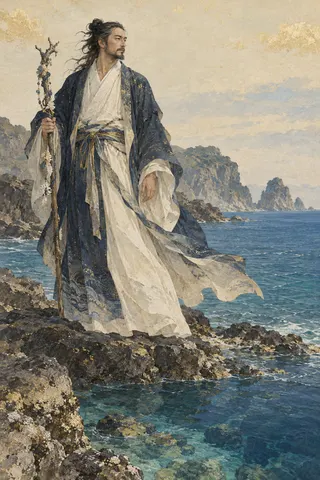
In the Kojiki, Sokotsutsunoo is the kami who appears when Izanagi no Kami rinses himself at the bottom of the water. The three kami of the bottom, middle and surface are together called Suminoe no Mimae no Ōkami, and they lead on to the present-day Sumiyoshi Sanshin (three kami of Sumiyoshi).
This page introduces the myths told in the classics and the faith handed down in various places, with their sources. It does not guarantee that any particular wish will be fulfilled.
English pages are the site’s own translations of its Japanese pages. The sources cited are in Japanese. 日本語で読む
What kind of kami
In the Kojiki, Sokotsutsunoo is the kami who appears when Izanagi no Kami rinses himself at the bottom of the water. The three kami of the bottom, middle and surface are together called Suminoe no Mimae no Ōkami, and they lead on to the present-day Sumiyoshi Sanshin (three kami of Sumiyoshi).
Source: 國學院大學・神社本庁
What the myths hand down
Sokotsutsunoo appears in the scene where Izanagi no Kami, having returned from Yomi, performs purification (misogi). The Watatsumi Sanshin (three kami of Watatsumi), born in the same scene of purification, are recorded as a separate set of three kami.
Source: 國學院大學・神社本庁
Links between the sources and faith
The Sumiyoshi Sanshin are known through faith in which people pray for safety at sea, and Jinja Honchō also introduces their connections with fishing, farming and waka poetry. We do not divide the faith that reveres the three kami together into the work of any single one.
Source: 國學院大學・神社本庁
An example of a chant (in Japanese)
祓え給い、清め給え、神(かむ)ながら守り給い、幸(さきわ)え給え
Related shrines and temples
Related kami and buddhas
Sources (in Japanese)
- 國學院大學「古事記ビューアー・神名データベース「底箇之男命」」(2026-10-15 確認)
- 神社本庁「各地の神社―住吉さま」(2026-10-15 確認)
- 國學院大學「古事記ビューアー・神名データベース「底箇之男命」」(2026-10-15 確認)