
Deity of shinbutsu shūgō (kami–buddha syncretism)
Itsukushima
厳島
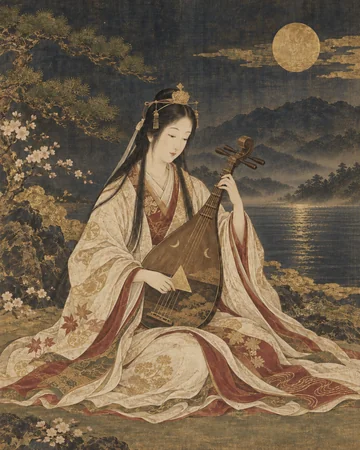
Itsukushima in this entry is one of the four Myōjin of the Four Shrines of Kōyasan. At Niutsuhime Jinja, this corresponds to Ichikishimahime no Ōkami of the Fourth Sanctuary, and the shrine introduces divine virtues related to the sea and water, wealth and the performing arts. The shrine's explanation also mentions a faith linked with Benzaiten of Buddhism.
This introduction is based on materials published by shrines, temples, and schools, starting with Shōhōin. It is summarized within the scope of the beliefs and traditions those materials convey, and does not present explanations or customs common to all schools, shrines, and temples.
English pages are the site’s own translations of its Japanese pages. The sources cited are in Japanese. 日本語で読む
Itsukushima Myōjin, joining faith in water, the arts and wealth
Itsukushima in this entry is one of the four Myōjin of the Four Shrines of Kōyasan. At Niutsuhime Jinja, this corresponds to Ichikishimahime no Ōkami of the Fourth Sanctuary, and the shrine introduces divine virtues related to the sea and water, wealth and the performing arts. The shrine's explanation also mentions a faith linked with Benzaiten of Buddhism.
Source: 丹生都比売神社
A kami welcomed from Itsukushima in Aki
The shrine tells that in the Kamakura period it welcomed Ichikishimahime no Ōkami from Itsukushima in Aki, together with the kami of Kehi, and came to enshrine four sanctuaries. This differs from the lineage of kami introduced by Shōhōin, and it cannot be summarized as an account in which Kūkai enshrined all four kami at the same time.
Source: 丹生都比売神社・飛不動尊 正宝院
Faith for safe voyages, financial fortune and the performing arts
Niutsuhime Jinja introduces Ichikishimahime no Ōkami of the Fourth Sanctuary as a goddess who governs voyages, financial fortune and the performing arts. The shrine's name Itsukushima Myōjin is tied to faith in this kami. It offers a clue to understanding prayers for crossing the sea, for a richer life and for the performing arts.
Source: 丹生都比売神社