
Deity of shinbutsu shūgō (kami–buddha syncretism)
Kehi Myōjin
気比明神
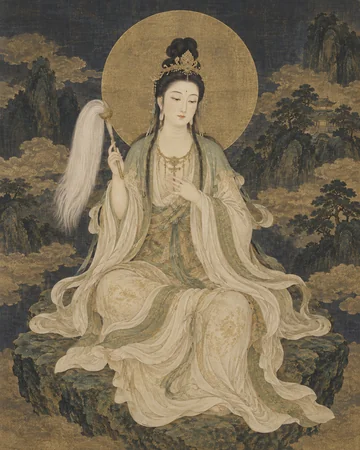
Kehi Myōjin here is positioned as one of the Shisha Myōjin, the four myōjin of Kōyasan. Niutsuhime Jinja enshrines Ōgetsuhime no Ōkami in its third sanctuary and explains her as a kami who governs the five grains and food. Its history relates that she is a kami welcomed from Kehi in Echizen.
This introduction is based on materials published by shrines, temples, and schools, starting with Shōhōin. It is summarized within the scope of the beliefs and traditions those materials convey, and does not present explanations or customs common to all schools, shrines, and temples.
English pages are the site’s own translations of its Japanese pages. The sources cited are in Japanese. 日本語で読む
Among the four myōjin, the kami who supports food
Kehi Myōjin here is positioned as one of the Shisha Myōjin, the four myōjin of Kōyasan. Niutsuhime Jinja enshrines Ōgetsuhime no Ōkami in its third sanctuary and explains her as a kami who governs the five grains and food. Its history relates that she is a kami welcomed from Kehi in Echizen.
Source: 丹生都比売神社
The Kamakura period, when the four shrines came together
Niutsuhime Jinja explains that Ōgetsuhime no Ōkami, an old friend of Niutsuhime no Ōkami, and Ichikishimahime no Ōkami of Itsukushima were welcomed in the Kamakura period following an oracle. This tradition differs from the lineage "daughter of Niu Gongen" given in Shōhōin's iconographic notes.
Source: 丹生都比売神社・丹生都比売神社・飛不動尊 正宝院
Gratitude for the blessings of the five grains and food
Kehi Myōjin at Niutsuhime Jinja is Ōgetsuhime no Ōkami, enshrined in the third sanctuary. The shrine explains her as a goddess who governs agriculture and food. This can be read as a virtue connected with gratitude for harvests and for daily food. It does not uniformly identify the enshrined kami of every shrine connected with the name Kehi as this goddess.
Source: 丹生都比売神社
Related kami and buddhas
Sources (in Japanese)
- 飛不動尊 正宝院「仏様の世界:気比明神」(2026-10-14 確認)
- 飛不動尊 正宝院「仏様の世界:目次」(2026-10-14 確認)
- 丹生都比売神社「ご祭神」(2026-10-15 確認)
- 丹生都比売神社「ご由緒」(2026-10-15 確認)