
Deity of shinbutsu shūgō (kami–buddha syncretism)
Shingū
新宮
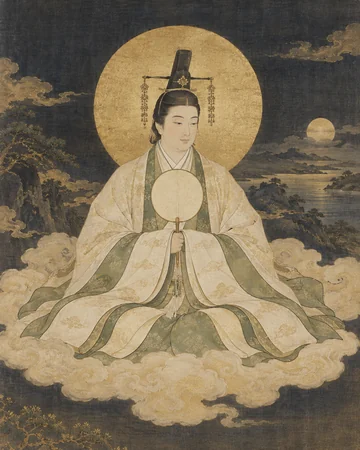
In the fusion of kami and buddhas at Kumano, Shingū is connected with the faith that takes Yakushi Nyorai as its original buddha (honjibutsu). Today Kumano Hayatama Taisha explains that its principal kami are Kumano Hayatama no Ōkami and Kumano Fusumi no Ōkami. The kami enshrined at the shrine and the original buddha considered in Buddhist terms to be their true nature are different layers of names.
This introduction is based on materials published by shrines, temples, and schools, starting with Shōhōin. It is summarized within the scope of the beliefs and traditions those materials convey, and does not present explanations or customs common to all schools, shrines, and temples.
English pages are the site’s own translations of its Japanese pages. The sources cited are in Japanese. 日本語で読む
The kami Hayatama and Yakushi Nyorai as original buddha
In the fusion of kami and buddhas at Kumano, Shingū is connected with the faith that takes Yakushi Nyorai as its original buddha (honjibutsu). Today Kumano Hayatama Taisha explains that its principal kami are Kumano Hayatama no Ōkami and Kumano Fusumi no Ōkami. The kami enshrined at the shrine and the original buddha considered in Buddhist terms to be their true nature are different layers of names.
Source: 熊野本宮大社・熊野速玉大社
Peace in daily life, and the power to bind and nurture
Kumano Hayatama Taisha speaks of Hayatama no Ōkami in connection with peace in this life and improved fortune, and of Fusumi no Ōkami in connection with the power to nurture life and good relationships (enmusubi). The shrine is called "Shingū" (new shrine) because of its history as a new shrine in contrast to the old shrine on Kamikurayama, where the kami are said to have descended.
Source: 熊野速玉大社
A teaching of welcoming people even in wet straw sandals
Kumano Hayatama Taisha has a tradition that people whose straw sandals (waraji) have become wet and dirty on the long pilgrimage road are welcomed into the worship hall (raiden) without distinction based on how they are dressed. The shrine cherishes this as expressing a spirit of accepting people of every position. Kumano's "yomigaeri" (revival) is also described as a prayer to regain the strength to live and to set out again.
Source: 熊野速玉大社