
Buddha (nyorai)
Yakushi Nyorai
薬師如来
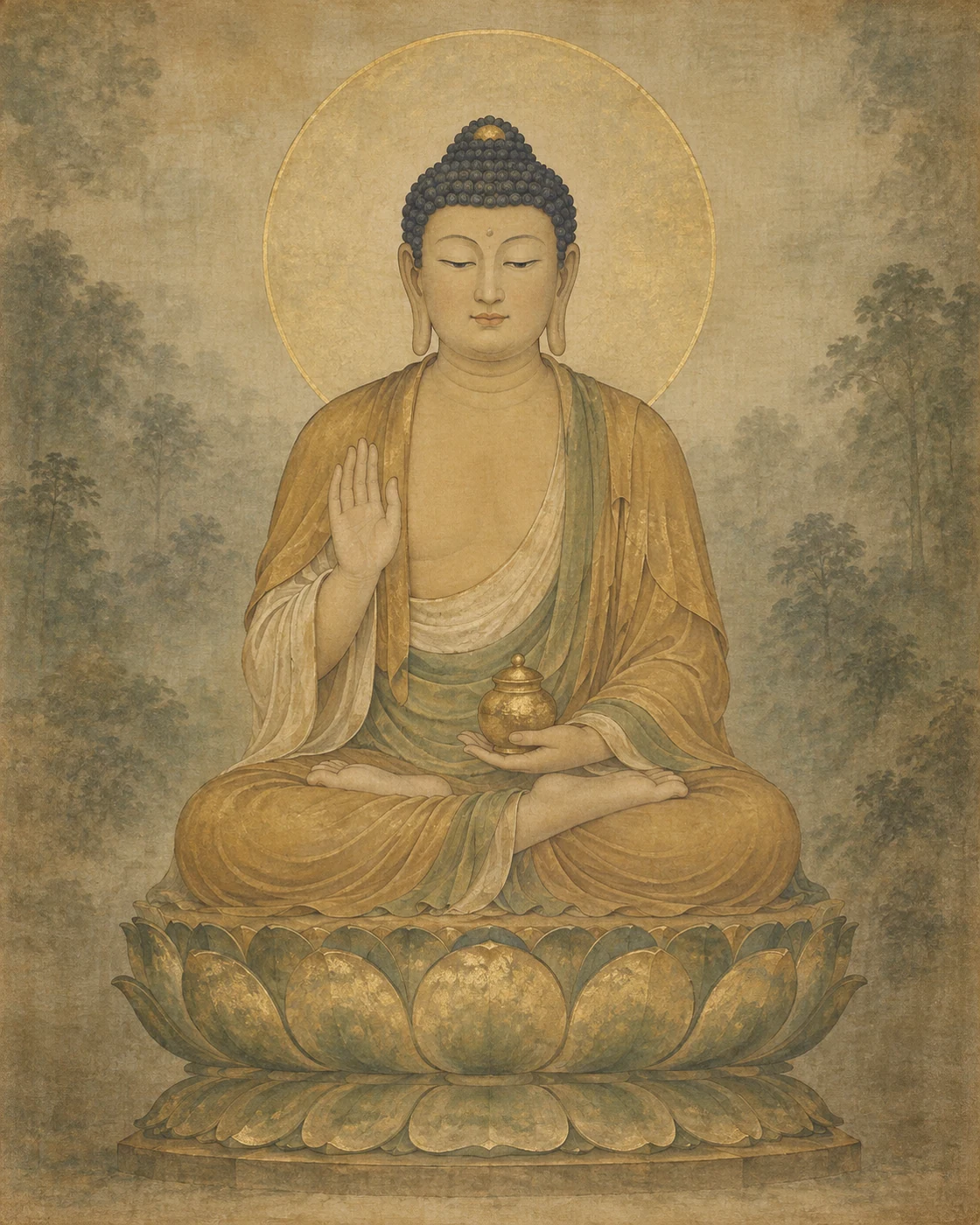
Yakushi Nyorai, formally called Yakushi Rurikō Nyorai, is regarded as the lord of the Eastern Pure Land of Pure Lapis Lazuli (Jōruri Jōdo). He is cherished as a buddha who stays close to those suffering from illness, but his vows also extend to the hardships of people's daily lives, such as lack of clothing and food, and poverty.
This page presents, separately, the introduction of the principal image of Yakushiji and Shōhōin's explanation of the iconography and mantra. It does not treat the services or forms of worship of different schools and temples as one common practice.
English pages are the site’s own translations of its Japanese pages. The sources cited are in Japanese. 日本語で読む
Oyakushi-san of the Eastern Pure Land of Lapis Lazuli
Yakushiji explains Yakushi Rurikō Nyorai as the lord who dwells in the Eastern Pure Land of Pure Lapis Lazuli. In the Yakushi Triad, Nikkō Bosatsu and Gakkō Bosatsu stand on either side and are said to watch over people like the light of the sun and the moon. Seeing Yakushi Nyorai together with the bodhisattvas who attend him shows the breadth of this faith.
Source: 奈良薬師寺
The suffering to which the twelve vows are directed
The Twelve Great Vows introduced by Shin-Yakushiji are vows that Yakushi Nyorai made when he was a bodhisattva. They speak of saving people such as those who are ill but have no access to doctors or medicine, and those who lack food or clothing. Faith in recovery from illness and peace of body and mind is tied to these vows of salvation. This is an introduction to religious vows, and does not indicate any medical effect of the images or the mantra.
Source: 新薬師寺
The founding of Yakushiji, praying for the empress's recovery
Yakushiji's official history relates that in 680, Emperor Tenmu vowed to build the temple, praying for the empress's recovery from illness. The empress later became Empress Jitō and carried on the work of construction. It is one example of the history of how faith in Yakushi was tied to the actual founding of a temple.
Source: 奈良薬師寺
With a medicine jar, and without
Shōhōin introduces a form holding a medicine jar in the left hand, while also explaining that some statues from the Nara period do not hold one. A figure is not excluded from being Yakushi Nyorai just because its attributes differ. It is important to consider the period of creation and the history of the temple as well.
Source: 飛不動尊 正宝院
Mantra (in Japanese, as written in the sources)
おん ころころ せんだり まとうぎ そわか
Source: 飛不動尊 正宝院・四国霊場第22番札所 平等寺
オン ビセイゼイ ビセイゼイ ビセイジャ サンボリギャテイ ソワカ
Source: 天台宗 医王山 与楽寺
のうまく さまんだ ぼだなん ばいせいじゃ くろ ばいちょりや はらばあらんじゃや たたぎゃたや たにゃた おん ばいせいぜい ばいせいぜい ばいせいじゃ さんぼりぎゃてい そわか
Source: 四国霊場第22番札所 平等寺
Shown as written in the Japanese sources. This site does not set how or how many times to recite it.
Related shrines and temples
- Yakushi-ji KondōNara, Nara Prefecture
- Shin-Yakushi-jiNara, Nara Prefecture
- Tō-ji (Kyōō Gokoku-ji)Kyoto, Kyoto Prefecture
- Hieizan Enryaku-jiŌtsu, Shiga Prefecture
- Unryū-inHigashiyama, Kyoto, Kyoto Prefecture
- Jigen-inIzumisano, Osaka Prefecture
- Zensui-jiKonan, Shiga Prefecture
- Saimyō-jiKōra, Shiga Prefecture
- Buraku-jiŌtoyo, Kōchi Prefecture
- Shōryaku-jiNara, Nara Prefecture
- Yōgō-jiMiyamae Ward, Kawasaki, Kanagawa Prefecture
- Fudō-inHigashi Ward, Hiroshima, Hiroshima Prefecture
- Risshaku-jiYamagata, Yamagata Prefecture
- Myōtsū-jiObama, Fukui Prefecture
- Matsuo-ji (Azumino)Azumino, Nagano Prefecture
- Yusan-jiFukuroi, Shizuoka Prefecture
- Mōtsū-jiHiraizumi, Nishiiwai District, Iwate Prefecture
- ShukōinMinami, Saitama, Saitama Prefecture
- Ryōsen-jiNara, Nara Prefecture
- Kan'ei-jiTaitō, Tokyo
- Kōsen-jiKusatsu, Agatsuma District, Gunma Prefecture
- Fukō-jiOgawa, Hiki District, Saitama Prefecture
- Komatsu-jiMinamibōsō, Chiba Prefecture
- Nihon-jiKyonan, Awa District, Chiba Prefecture
- Baishō-inNakano, Tokyo
- Seikō-ji (Hokuto)Hokuto, Yamanashi Prefecture
- Buppō Shōryū-jiSuwa, Nagano Prefecture
- Saisan-jiMakinohara, Shizuoka Prefecture
- Kōden-jiKitanagoya, Aichi Prefecture
- Sōrin-jiHigashiyama, Kyoto, Kyoto Prefecture
- Byōdō-jiShimogyō, Kyoto, Kyoto Prefecture
- Shōji-jiNishikyō, Kyoto, Kyoto Prefecture
- Tōmyō-jiYamatokōriyama, Nara Prefecture
- Hōrin-jiIkaruga, Ikoma District, Nara Prefecture
- Ichibata-jiIzumo, Shimane Prefecture
- Konzō-jiZentsūji, Kagawa Prefecture
- Kōshaku-jiTōon, Ehime Prefecture
- Kichijō-inYamagata, Yamagata Prefecture
- Fukushō-jiNishi Ward, Saitama, Saitama Prefecture
- Hōgon-inKawaguchi, Saitama Prefecture
- Enshō-jiShinjuku, Tokyo
- Chigyō-inSetagaya, Tokyo
- Daiman-jiKita, Tokyo
- Kōgaku-jiHachiōji, Tokyo
- Jōshō-jiChōfu, Tokyo
- Tōkō-inŌiso, Naka District, Kanagawa Prefecture
- Rin'yō-jiGifu, Gifu Prefecture
- Tōgen-jiŌtsu, Shiga Prefecture
- Daitaku-jiGojō, Nara Prefecture
- Daikō-jiMitoyo, Kagawa Prefecture
- Tōzen-ji (Sasebo)Sasebo, Nagasaki Prefecture
- Ishite-jiMatsuyama, Ehime Prefecture
- Itoku-jiChōshi, Chiba Prefecture
- Shūtoku-inSakura, Chiba Prefecture
- Shōdai-jiEdogawa, Tokyo
- Anraku-ji (Awara)Awara, Fukui Prefecture
- Daifuku-jiHamana, Hamamatsu, Shizuoka Prefecture
Related kami and buddhas
Sources (in Japanese)
- 奈良薬師寺「金堂」(2026-10-14 確認)
- 神仏霊場会「薬師寺」(2026-10-14 確認)
- 新薬師寺「十二の願い」(2026-10-15 確認)
- 奈良薬師寺「薬師寺デジタル絵巻」(2026-10-15 確認)
- 飛不動尊 正宝院「仏様の世界:薬師如来」(2026-10-14 確認)
- 飛不動尊 正宝院「仏様の世界:十三仏」(2026-10-14 確認)
- 四国霊場第22番札所 平等寺「薬師如来とは:おとなえする真言」(2026-10-15 確認)
- 天台宗 医王山 与楽寺「薬師如来真言・中咒(公式動画の説明欄)」(2026-10-15 確認)