
Founder or eminent monk
Shinran Shōnin
親鸞聖人
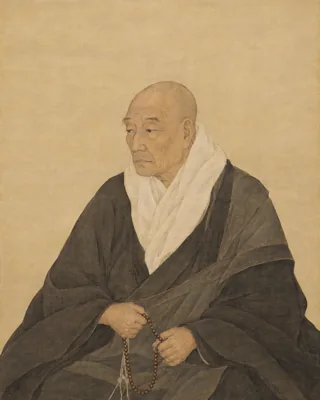
After practicing on Mount Hiei, Shinran met Hōnen and learned the teaching of the nenbutsu. He conveyed the teaching through his life in Echigo and the Kantō region, and wrote the Kyōgyōshinshō. In Jōdo Shinshū he is revered as the founder.
This page takes the official explanations of the Jōdo Shinshū Honganji-ha as its guide. The nenbutsu is treated as words concerning Amida Nyorai.
English pages are the site’s own translations of its Japanese pages. The sources cited are in Japanese. 日本語で読む
From the meeting with Hōnen
Shinran became a monk at a young age and practiced on Mount Hiei for a long time. At 29 he encountered Hōnen's teaching and set out on the path of living by the original vow of Amida Nyorai.
Source: 浄土真宗本願寺派
Living with the original vow as one's support
The Hongwanji school teaches a way of living that entrusts itself to the working of Amida Nyorai, and the nenbutsu of gratitude. Reverence for Shinran Shōnin is not to be turned into a practice of asking the Shōnin himself to fulfill one's wishes.
Source: 浄土真宗本願寺派
Life in Echigo and the Kantō, and the Kyōgyōshinshō
After his exile to Echigo, Shinran also conveyed the teaching in the Kantō region. His principal work, the Kyōgyōshinshō, brings together the teachings of Jōdo Shinshū that Shinran conveyed.
Source: 浄土真宗本願寺派
A cloth wrapped around the neck, and prayer beads in hand
The “Bearskin Portrait” (熊皮御影) at the Nara National Museum depicts Shinran with a cloth cap (帽子) wrapped around his neck, holding prayer beads in both hands. The half-length figure on this site is based on those features.
Source: 国立文化財機構/奈良国立博物館
Related shrines and temples
Related kami and buddhas
Sources (in Japanese)
- 浄土真宗本願寺派「はじめての浄土真宗」(2026-10-15 確認)
- 浄土真宗本願寺派「親鸞聖人御誕生850年・立教開宗800年についての消息」(2026-10-15 確認)
- 国立文化財機構/奈良国立博物館「e国宝:親鸞上人像(熊皮御影)」(2026-10-15 確認)