
Bodhisattva (bosatsu)
Kokūzō Bosatsu
虚空蔵菩薩
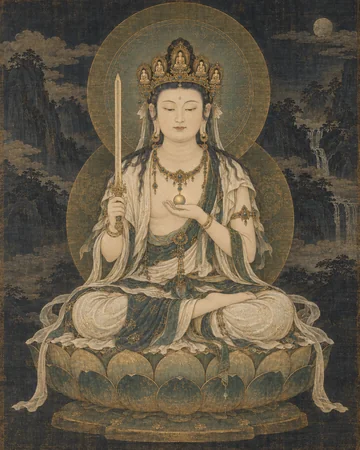
Kokūzō Bosatsu is worshipped as a bodhisattva who holds within an inexhaustible store of wisdom and merit, like vast space. Shōhōin introduces forms such as one with five buddhas arranged on the jeweled crown, holding a sword and a jewel.
This introduction is based on materials from Shōhōin (Tobi Fudō). It is summarized within the scope of the beliefs and traditions those materials convey, and does not present explanations or customs common to all schools, shrines, and temples.
English pages are the site’s own translations of its Japanese pages. The sources cited are in Japanese. 日本語で読む
Inexhaustible wisdom and merit
Kokūzō Bosatsu is worshipped as a bodhisattva who holds within an inexhaustible store of wisdom and merit, like vast space. Shōhōin introduces forms such as one with five buddhas arranged on the jeweled crown, holding a sword and a jewel.
Source: 飛不動尊 正宝院
Jūsan Mairi: praying for wisdom at a milestone of growth
At Hōrin-ji in Kyoto, the custom of Jūsan Mairi has been passed down, in which children aged thirteen by the traditional count visit Kokūzō Bosatsu and pray for wisdom and a happy life. It is one example of faith that watches over the milestone from childhood toward adulthood.
Source: 虚空蔵 法輪寺
Hōrin-ji's tradition said to begin with Emperor Seiwa
Hōrin-ji relates that the origin of Jūsan Mairi was a Buddhist service held at the request of Emperor Seiwa, who came to the throne as a child, as a sign of coming of age at thirteen by the traditional count. This origin story is introduced as background to how visits to pray for wisdom spread into a rite of growing up.
Source: 虚空蔵 法輪寺
Mantra (in Japanese, as written in the sources)
おんばさら あらたな かん。
Source: 飛不動尊 正宝院
おんばさら あらたな うん。
Source: 飛不動尊 正宝院
のうぼう あきゃしゃきゃらばや おん ありきゃ まりぼり そわか
Source: 竹林山 八幡寺
Shown as written in the Japanese sources. This site does not set how or how many times to recite it.
Related shrines and temples
Related kami and buddhas
Sources (in Japanese)
- 飛不動尊 正宝院「仏様の世界:虚空蔵菩薩」(2026-10-14 確認)
- 飛不動尊 正宝院「仏様の世界:目次」(2026-10-14 確認)
- 飛不動尊 正宝院「仏様の世界:十三仏」(2026-10-14 確認)
- 虚空蔵 法輪寺「行事・祭事:十三まいり」(2026-10-15 確認)
- 竹林山 八幡寺「淡路島十三仏霊場:第十三番 虚空蔵菩薩」(2026-10-15 確認)