
Kannon (bodhisattva)
Batō Kannon
馬頭観音
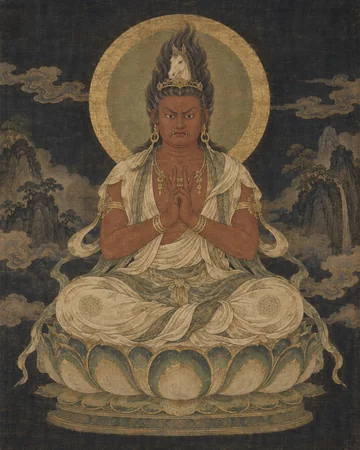
Batō Kannon is a Kannon who shows a horse's head above its own head and takes a wrathful form. Shōhōin describes it as a deity connected with the salvation of the animal realm. As with Kannon in gentle forms, the work of saving people lies at the root of its sternness.
This introduction is based on materials from Shōhōin (Tobi Fudō). It is summarized within the scope of the beliefs and traditions those materials convey, and does not present explanations or customs common to all schools, shrines, and temples.
English pages are the site’s own translations of its Japanese pages. The sources cited are in Japanese. 日本語で読む
A Kannon who cuts off delusion with a stern expression
Batō Kannon is a Kannon who shows a horse's head above its own head and takes a wrathful form. Shōhōin describes it as a deity connected with the salvation of the animal realm. As with Kannon in gentle forms, the work of saving people lies at the root of its sternness.
Source: 飛不動尊 正宝院
Prayers for horses that lived alongside people
In local communities in Japan, faith concerned with the safety of horses and with memorial services for them spread. Records of Itabashi Ward also note a Batō Kannon that served as a memorial for dead horses. Gratitude to animals that supported work in the fields and transport remains in daily life in the form of stone monuments and visits to pray.
Source: 板橋区教育委員会
Perceiving Kannon at mountains resembling a horse's ears
According to the temple tradition of Matsunoo-dera, the holy man Ikō Shōnin, who came from Tang China, likened two peaks to Mount Baji in China, recited the Kannon Sutra beneath a pine tree, and perceived Batō Kannon. It is an origin story that links the shape of the local mountains with the form of the buddha enshrined there.
Source: 神仏霊場会
Mantra (in Japanese, as written in the sources)
おん あみりとどはば うんぱった。
Source: 飛不動尊 正宝院
おん かんうんきゃだや ばんじゃ そわたや そわか。
Source: 飛不動尊 正宝院
Shown as written in the Japanese sources. This site does not set how or how many times to recite it.
Related shrines and temples
Related kami and buddhas
Sources (in Japanese)
- 飛不動尊 正宝院「仏様の世界:馬頭観音」(2026-10-14 確認)
- 飛不動尊 正宝院「仏様の世界:目次」(2026-10-14 確認)
- 板橋区教育委員会「馬頭観音さん、見ていてくれてありがとう」(2026-10-15 確認)
- 神仏霊場会「松尾寺」(2026-10-15 確認)