
Kami (Shinto deity)
Tsukuyomi no Mikoto
月読命
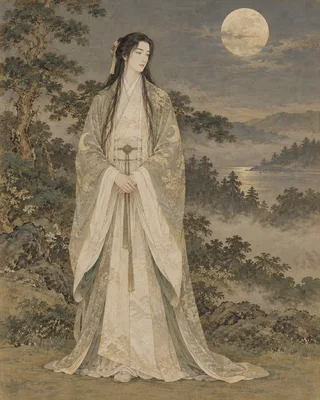
Ise Jingū describes Tsukuyomi no Mikoto as a kami who makes known the waxing and waning of the moon and is connected with the calendar. In the Kojiki, Tsukuyomi is one of the sankishi (three noble children), alongside Amaterasu Ōmikami and Susanoo no Mikoto, and is commanded to rule Yoru no Osukuni, the realm of the night.
This page introduces myths and the faith handed down at individual shrines, with their sources. Descriptions of divine virtues are explanations within religious faith and do not guarantee the outcome of any prayer. We do not set uniform rules for the traditions or customs of individual shrines and temples.
English pages are the site’s own translations of its Japanese pages. The sources cited are in Japanese. 日本語で読む
A kami connected with the moon and the night
Ise Jingū describes Tsukuyomi no Mikoto as a kami who makes known the waxing and waning of the moon and is connected with the calendar. In the Kojiki, Tsukuyomi is one of the sankishi (three noble children), alongside Amaterasu Ōmikami and Susanoo no Mikoto, and is commanded to rule Yoru no Osukuni, the realm of the night.
Source: 伊勢神宮・國學院大學
Tsukiyomi-no-miya (月読宮) and Tsukiyomi-no-miya (月夜見宮)
At Ise Jingū, Tsukuyomi is enshrined at Tsukiyomi-no-miya (月読宮), a betsugū (associated shrine) of the Naikū (Inner Shrine), and at Tsukiyomi-no-miya (月夜見宮), a betsugū of the Gekū (Outer Shrine). Ise Jingū introduces divine virtues likened to the moon, and here we do not add benefits for particular wishes that cannot be confirmed.
Source: 伊勢神宮
Born from purification
In the Kojiki, Tsukuyomi is said to have been born when Izanagi no Kami, having returned from the land of Yomi, washed his right eye. Tsukuyomi appears in few scenes, and because the Nihon Shoki also has accounts giving a different role, we do not combine them into a single storyline.
Source: 國學院大學
An example of a chant (in Japanese)
祓え給い、清め給え、神(かむ)ながら守り給い、幸(さきわ)え給え
Related shrines and temples
Sources (in Japanese)
- 伊勢神宮「域外の別宮」(2026-10-15 確認)
- 國學院大學「月読命」(2026-10-15 確認)
- 國學院大學「古事記ビューアー・神名データベース「月読命」」(2026-10-15 確認)