
Deva (ten) or guardian deity
Myōken Bosatsu
妙見菩薩
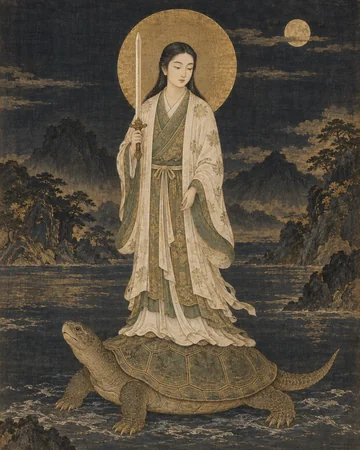
Myōken Bosatsu is a deity with a background in star devotion related to Hokushin, the pole star. Nose Myōkensan explains the star that shows the northern direction as a symbol that guides the path people take. Though called "bosatsu," it is sometimes also described as a deity of the tenbu (heavenly beings).
This introduction is based on materials from Shōhōin (Tobi Fudō). It is summarized within the scope of the beliefs and traditions those materials convey, and does not present explanations or customs common to all schools, shrines, and temples.
English pages are the site’s own translations of its Japanese pages. The sources cited are in Japanese. 日本語で読む
Myōken devotion, derived from the pole star
Myōken Bosatsu is a deity with a background in star devotion related to Hokushin, the pole star. Nose Myōkensan explains the star that shows the northern direction as a symbol that guides the path people take. Though called "bosatsu," it is sometimes also described as a deity of the tenbu (heavenly beings).
Source: 能勢妙見山・飛不動尊 正宝院
Praying for good fortune, learning and the arts
At Nose Myōkensan, people have prayed for good fortune (kaiun) as well as for progress in learning and the performing arts. Devotion is strong among people involved in the stage and music, and in the morning and evening prayers, people's health and world peace are also prayed for. Devotion that looks up to the stars is tied to wishes for life and work.
Source: 能勢妙見山・能勢妙見山
A tradition of a mountain where a star came down
Nose Myōkensan has a tradition that long ago a star came down to this place. It is a sacred site that later developed with the devotion of the Nose clan and is still a temple of the Nichiren school today. It is a place where the story of a star and a mountain, local history and Buddhist prayer overlap.
Source: 能勢妙見山・能勢妙見山
Several traditions about the honji-butsu
"Honji-butsu" is a term from the fusion of kami and buddhas that regards a buddha as the original form of a kami. Shōhōin's explanation of Myōken Bosatsu gives differing views that take Shaka, Kannon or Yakushi as the honji-butsu, as well as devotion to the kami Myōken with Jūichimen Kannon as its honji. Rather than fixing Myōken as another name of a single buddha, these can be read separately as traditions handed down in each region and temple.
Source: 飛不動尊 正宝院
Mantra (in Japanese, as written in the sources)
おん そぢりしゅた そわか。
Source: 飛不動尊 正宝院
おん まかしりえい しべい そわか。
Source: 飛不動尊 正宝院
Shown as written in the Japanese sources. This site does not set how or how many times to recite it.
Related kami and buddhas
Sources (in Japanese)
- 飛不動尊 正宝院「仏様の世界:妙見菩薩」(2026-10-14 確認)
- 飛不動尊 正宝院「仏様の世界:目次」(2026-10-14 確認)
- 能勢妙見山「能勢妙見山とは」(2026-10-15 確認)
- 能勢妙見山「ごあいさつ」(2026-10-15 確認)