
Buddha (nyorai)
Shaka Nyorai (Shakyamuni)
釈迦如来
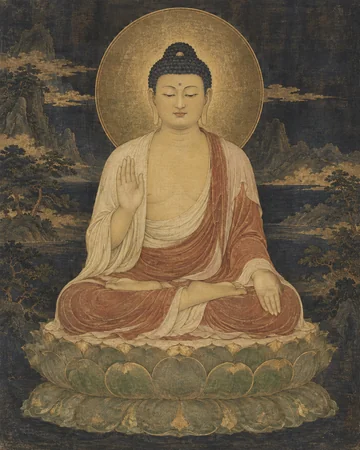
Shaka Nyorai is the name under which the historical Shaka, who taught in India, is revered as a buddha who attained awakening. Shakamuni means "the sage of the Shaka clan." He looked closely at the suffering of life and taught people its cause and the path that leads away from suffering.
This introduction is based on materials from Shōhōin (Tobi Fudō). It is summarized within the scope of the beliefs and traditions those materials convey, and does not present explanations or practices shared by all schools, temples, and shrines.
English pages are the site’s own translations of its Japanese pages. The sources cited are in Japanese. 日本語で読む
The awakened one who founded Buddhism
Shaka Nyorai is the name under which the historical Shaka, who taught in India, is revered as a buddha who attained awakening. Shakamuni means "the sage of the Shaka clan." He looked closely at the suffering of life and taught people its cause and the path that leads away from suffering.
Source: 曹洞宗・飛不動尊 正宝院
Wisdom and compassion that face suffering
Shaka's teaching sets out suffering, its cause, the ending of suffering, and the path that leads there as the "Four Noble Truths" (shitai). He is not placed as a deity in charge of one particular wish, but is looked up to as a guide for leaving delusion behind through one's daily way of life and practice.
Source: 曹洞宗
Leaving harsh austerities for the bodhi tree
In the accounts of the Buddha's life, Shaka confronted the problems of old age, sickness, and death and left home to become a renunciant. After undergoing severe austerities, he realized that tormenting the body alone does not resolve them. It is said that he gave up the austerities, meditated, and awakened to the principle of dependent origination (engi): that things arise from causes and conditions.
Source: 真宗大谷派 真宗会館
Different forms for birth, practice, and preaching
Statues of Shaka include figures shown preaching, as well as the infant Buddha at birth, pointing to heaven with the right hand and to the earth with the left. The absence of the ornate jewelry worn by bodhisattva statues is a feature that marks the form of a buddha who has renounced the world. Among the Thirteen Buddhas (Jūsanbutsu), he is assigned as the guiding buddha of the second seven-day memorial (futananoka).
Source: 飛不動尊 正宝院
Mantra (in Japanese, as written in the sources)
なーまく さ-まんだ ぼだなんばく。
Source: 飛不動尊 正宝院
Shown as written in the Japanese sources. This site does not set how or how many times to recite it.
Related shrines and temples
- Chūson-jiHiraizumi, Iwate Prefecture
- Daihonzan Eihei-jiEiheiji, Fukui Prefecture
- Chōhō-jiKainan, Wakayama Prefecture
- Sennyū-jiHigashiyama, Kyoto, Kyoto Prefecture
- Nanzen-jiSakyō, Kyoto, Kyoto Prefecture
- Tōkei-jiKamakura, Kanagawa Prefecture
- Sōzen-jiHamura, Tokyo
- Engaku-jiKamakura, Kanagawa Prefecture
- Buttsū-jiMihara, Hiroshima Prefecture
- Kokutai-jiTakaoka, Toyama Prefecture
- Hōkō-jiHamana Ward, Hamamatsu, Shizuoka Prefecture
- Myōshin-jiUkyō Ward, Kyoto, Kyoto Prefecture
- Renge-ji (Banba)Maibara, Shiga Prefecture
- Shōkoku-jiKamigyō Ward, Kyoto, Kyoto Prefecture
- Jishō-jiSakyō Ward, Kyoto, Kyoto Prefecture
- Daiji-jiTome, Miyagi Prefecture
- Morin-jiTatebayashi, Gunma Prefecture
- Enryū-jiNaka Ward, Hiroshima, Hiroshima Prefecture
- Nanzō-inSasaguri, Kasuya District, Fukuoka Prefecture
- Seihaku-jiYamanashi, Yamanashi Prefecture
- Gyokusen-ji (Shimoda)Shimoda, Shizuoka Prefecture
- Tōkō-jiHagi, Yamaguchi Prefecture
- Kakushū-jiHirosaki, Aomori Prefecture
- Daian-jiMutsu, Aomori Prefecture
- Jōchi-jiKamakura, Kanagawa Prefecture
- Kōsan-jiUkyō, Kyoto
- Honei-jiKazo, Saitama Prefecture
- Heirin-jiNiiza, Saitama Prefecture
- Sengaku-jiMinato, Tokyo
- Tōchō-jiShinjuku, Tokyo
- Tenryū-inTaitō, Tokyo
- Tenryū-jiUkyō, Kyoto
- Hōkoku-jiKamakura, Kanagawa Prefecture
- Saijō-jiMinamiashigara, Kanagawa Prefecture
- Tōun-jiKanazawa, Ishikawa Prefecture
- Anraku-jiUeda, Nagano Prefecture
- Daichi-jiGifu, Gifu Prefecture
- Jion-jiGujō, Gifu Prefecture
- Kōshō-jiKamigyō, Kyoto, Kyoto Prefecture
- Sekihō-jiFushimi, Kyoto, Kyoto Prefecture
- Kōshō-ji (Uji)Uji, Kyoto Prefecture
- Chigen-jiMiyazu, Kyoto Prefecture
- Kōzen-jiAmagasaki, Hyōgo Prefecture
- Gesshō-jiAkashi, Hyōgo Prefecture
- Kagaku-jiAkō, Hyōgo Prefecture
- Kōtai-jiNagasaki, Nagasaki Prefecture
- Daiō-inHitachi, Ibaraki Prefecture
- Kōshū-jiIwatsuki Ward, Saitama, Saitama Prefecture
- Chōzen-jiKashiwa, Chiba Prefecture
- Kōfuku-jiSumida, Tokyo
- Myōsen-jiEdogawa, Tokyo
- Jutoku-jiTsurumi, Yokohama, Kanagawa Prefecture
- Sekiun-jiIsehara, Kanagawa Prefecture
- Ryūgen-jiTsunan, Nakauonuma District, Niigata Prefecture
- Jōsen-jiMatsumoto, Nagano Prefecture
- Tōsen-jiGifu, Gifu Prefecture
- Zendai-jiKani, Gifu Prefecture
- Shūon-anKyōtanabe, Kyoto Prefecture
- Kōgen-jiTanba, Hyōgo Prefecture
- Myōraku-jiHakata, Fukuoka
- Shōon-jiWakabayashi, Sendai
- Jōboku-inHigashikurume, Tokyo
- Hōen-jiKanazawa, Ishikawa Prefecture
- Myōsen-ji (Minami, Okayama)Minami, Okayama
- Daiman-ji (Taihaku, Sendai)Taihaku, Sendai
- Dairin-jiNihonmatsu, Fukushima Prefecture
- Keisoku-jiAshikaga, Tochigi Prefecture
- Daiō-jiŌtawara, Tochigi Prefecture
- Nison-inUkyō, Kyoto
- Senryū-jiKomae, Tokyo
- Shōtai-jiOdawara, Kanagawa Prefecture
- Hōsen-jiIsehara, Kanagawa Prefecture
- Myōjō-jiEbina, Kanagawa Prefecture
- Keishō-jiGujō, Gifu Prefecture
Related kami and buddhas
Sources (in Japanese)
- 飛不動尊 正宝院「仏様の世界:釈迦如来」(2026-10-14 確認)
- 飛不動尊 正宝院「仏様の世界:目次」(2026-10-14 確認)
- 飛不動尊 正宝院「仏様の世界:十三仏」(2026-10-14 確認)
- 曹洞宗「てらスクール 勉強会資料(2024年11月)」(2026-10-15 確認)
- 真宗大谷派 真宗会館「苦行を棄て覚りを開いた」(2026-10-15 確認)