
Kannon (bodhisattva)
Jūichimen Kannon
十一面観音
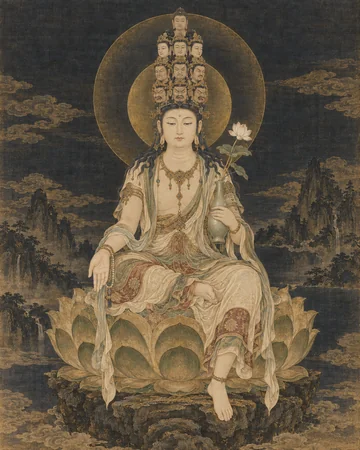
Jūichimen Kannon is a Kannon depicted with multiple faces on the head. Having not only compassionate faces but also angry faces and others, the figure shows a working that responds to different kinds of suffering and delusion. There are different types in the arrangement of the faces on the head and in the number of arms, and a painting in the collection of the Nara National Museum depicts a two-armed figure holding a water vessel and prayer beads.
This introduction is based on materials from Shōhōin (Tobi Fudō). It is summarized within the scope of the beliefs and traditions those materials convey, and does not present explanations or customs common to all schools, shrines, and temples.
English pages are the site’s own translations of its Japanese pages. The sources cited are in Japanese. 日本語で読む
A Kannon who saves people with many expressions
Jūichimen Kannon is a Kannon depicted with multiple faces on the head. Having not only compassionate faces but also angry faces and others, the figure shows a working that responds to different kinds of suffering and delusion. There are different types in the arrangement of the faces on the head and in the number of arms, and a painting in the collection of the Nara National Museum depicts a two-armed figure holding a water vessel and prayer beads.
Source: 飛不動尊 正宝院・国立文化財機構 e国宝/奈良国立博物館
Wishes to remove illness and misfortune, and the rite of repentance
Hasedera introduces freedom from illness as one of the virtues of Jūichimen Kannon, and explains that prayers for the end of epidemics have been offered at the Shuni-e. Keka (repentance) is the practice of reflecting on one's own wrongs and repenting of them. The wish to have suffering removed overlaps with a prayer that looks again at how one lives.
Source: 総本山 長谷寺
A sacred tree that brought disaster becomes Kannon
In the founding legend of Hasedera, a great camphor tree that drifted ashore is said to have caused fires and epidemics. The story tells that when Tokudō Shōnin made the tree into a statue of Kannon, the disasters subsided. It has been handed down as a temple tradition of receiving the great power of nature anew as a saving buddha.
Source: 総本山 長谷寺
Mantra (in Japanese, as written in the sources)
おん ろけいじばら きりく。
Source: 飛不動尊 正宝院
おん まかきゃろにきゃ そわか。
Source: 飛不動尊 正宝院・四国霊場第22番札所 平等寺
おん ろけい じんばら きりく
Source: 四国霊場第22番札所 平等寺
タニャタ オン タラタラ チリチリ トロトロ イテイハテイ シャレイシャレイ ハラシャレイ クソメイ クソメイ ハレイ イリビリ シリシリ チ ジャラ マハノウヤ ハリ マ シュダサトバ マカキャロニキャ ソワカ
Source: 四国霊場第22番札所 平等寺
Shown as written in the Japanese sources. This site does not set how or how many times to recite it.
Related shrines and temples
- Kegon-jiIbigawa, Ibi District, Gifu Prefecture
- Hase-deraNagano, Nagano Prefecture
- Tōri Tenjō-jiNada Ward, Kobe, Hyōgo Prefecture
- Daishō-inHatsukaichi, Hiroshima Prefecture
- Onsen-jiToyooka, Hyōgo Prefecture
- Buttsū-jiMihara, Hiroshima Prefecture
- Jōdo-jiOnomichi, Hiroshima Prefecture
- Kanmyō-jiIchinomiya, Chōsei District, Chiba Prefecture
- Rendai-jiKurashiki, Okayama Prefecture
- Hyakusai-jiHigashiōmi, Shiga Prefecture
- Enpuku-ji (Chōshi)Chōshi, Chiba Prefecture
- Gumyō-jiMinami, Yokohama, Kanagawa Prefecture
- Kairyūō-jiNara, Nara Prefecture
- Ishidō-jiMinamibōsō, Chiba Prefecture
- Yōgaku-jiKōtō, Tokyo
- Kennin-jiHigashiyama, Kyoto
- Sugimoto-deraKamakura, Kanagawa Prefecture
- Unkō-inFukuroi, Shizuoka Prefecture
- Banshō-jiNaka, Nagoya, Aichi Prefecture
- Fuka-jiShinshiro, Aichi Prefecture
- Matsuo Kannon-jiIse, Mie Prefecture
- Daiun-jiSakyō, Kyoto, Kyoto Prefecture
- Anshō-jiYamashina, Kyoto, Kyoto Prefecture
- Jigen-jiDaitō, Osaka Prefecture
- Henjō-jiUkyō Ward, Kyoto, Kyoto Prefecture
- Hōji-inSōka, Saitama Prefecture
- Chigyō-inSetagaya, Tokyo
- Hōgon-in (Ukyō, Kyoto)Ukyō, Kyoto, Kyoto Prefecture
- Kannon-jiYamato, Kanagawa Prefecture
- Ryūsan-jiIsehara, Kanagawa Prefecture
- Gofuku-jiMatsumoto, Nagano Prefecture
- Hōkō-jiMatsumoto, Nagano Prefecture
- Shusen-inGifu, Gifu Prefecture
- Nyoi-jiKyōtango, Kyoto Prefecture
- Dōmyō-jiFujiidera, Osaka Prefecture
- Hōshaku-jiŌyamazaki, Otokuni District, Kyoto Prefecture
- Myōken-jiTaishi, Minamikawachi District, Osaka Prefecture
- Kakuan-jiYamatokōriyama, Nara Prefecture
- Byōdō-ji (Sakurai)Sakurai, Nara Prefecture
- Jōfuku-jiIbara, Okayama Prefecture
- Taigū-jiHirosaki, Aomori Prefecture
- Ryōzen-ji (Ōita)Ōita, Ōita Prefecture
Related kami and buddhas
Sources (in Japanese)
- 飛不動尊 正宝院「仏様の世界:十一面観音」(2026-10-14 確認)
- 飛不動尊 正宝院「仏様の世界:目次」(2026-10-14 確認)
- 国立文化財機構 e国宝/奈良国立博物館「十一面観音像」(2026-10-15 確認)
- 総本山 長谷寺「十一面観音の疫病封じ」(2026-10-15 確認)
- 四国霊場第22番札所 平等寺「十一面観音とは:おとなえする真言」(2026-10-15 確認)