
Kami (Shinto deity)
Futsunushi no Ōkami
経津主大神
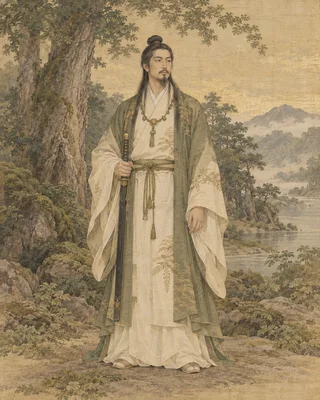
Futsunushi no Ōkami is the kami enshrined at Katori Jingū and is also introduced under the name Iwainushi no Mikoto. The shrine's history tells of Futsunushi's role as a kami who was sent to Izumo together with Takemikazuchi no Ōkami and took part in the transfer of the land.
This page introduces myths and the faith handed down at individual shrines, with their sources. Descriptions of divine virtues are explanations within religious faith and do not guarantee the outcome of any prayer. We do not set uniform rules for the traditions or customs of individual shrines and temples.
English pages are the site’s own translations of its Japanese pages. The sources cited are in Japanese. 日本語で読む
The kami enshrined at Katori
Futsunushi no Ōkami is the kami enshrined at Katori Jingū and is also introduced under the name Iwainushi no Mikoto. The shrine's history tells of Futsunushi's role as a kami who was sent to Izumo together with Takemikazuchi no Ōkami and took part in the transfer of the land.
Source: 香取神宮
Prayers for peace and for calm in daily life
In addition to faith in Futsunushi as the ancestral kami of peace and diplomacy, Katori Jingū introduces divine virtues such as safety of the household, industry, protection at sea and traffic safety. This is not limited to the aspect of a warrior kami, but is also connected with prayers for protecting daily life.
Source: 香取神宮
To Izumo with Takemikazuchi no Ōkami
In the history of Katori Jingū, the two kami, having received the command of Amaterasu Ōmikami, ask Ōkuninushi no Kami in Izumo to transfer the land, and fulfill that task. Here we present this as the story handed down by the shrine and do not confuse it with the kami who appear in other classics.
Source: 香取神宮
How this differs from the transfer of the land in the Kojiki
We distinguish the story of Futsunushi no Ōkami handed down by Katori Jingū from the kami who appear in the transfer of the land in the Kojiki. The Kojiki records that Ame no Torifune no Kami was sent along with Takemikazuchi no Kami, and the name of Futsunushi no Kami does not appear in this scene.
Source: 國學院大學
An example of a chant (in Japanese)
祓え給い、清め給え、神(かむ)ながら守り給い、幸(さきわ)え給え
Related shrines and temples
- Kasuga TaishaNara, Nara Prefecture
- Katori JingūKatori, Chiba Prefecture
- Kandani JinjaSakaide, Kagawa Prefecture
- Ichinomiya Nukisaki JinjaTomioka, Gunma Prefecture
- Hiraoka JinjaHigashiōsaka, Osaka Prefecture
- Kada Kasuga JinjaWakayama, Wakayama Prefecture
- Sakisaki JinjaAnnaka, Gunma Prefecture
- Yoshida JinjaSakyō Ward, Kyoto, Kyoto Prefecture
- Ōharano JinjaNishikyō Ward, Kyoto, Kyoto Prefecture
- Sōja JinjaMaebashi, Gunma Prefecture
- Kasai JinjaKatsushika, Tokyo
- Chiba JinjaChūō Ward, Chiba, Chiba Prefecture
- Kasuga JinjaŌta, Tokyo
- Kasuga Jinja (Kasuga)Kasuga, Fukuoka Prefecture
- Hinoo JinjaMiyakonojō, Miyazaki Prefecture
Sources (in Japanese)
- 香取神宮「御由緒」(2026-10-15 確認)
- 國學院大學「『古事記』上巻・葦原中国平定⑤(校訂本文)」(2026-10-15 確認)