
Bodhisattva (bosatsu)
Fugen Bosatsu
普賢菩薩
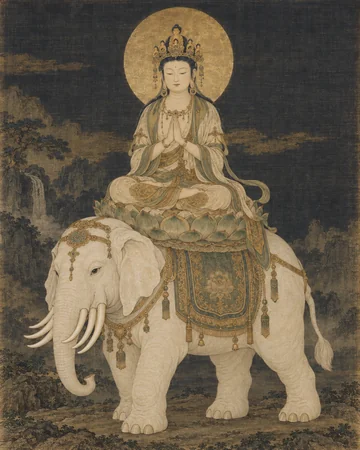
Fugen Bosatsu, together with Monju of wisdom, attends Shakyamuni and is worshipped as a bodhisattva who represents the work of compassion. The Lotus Sutra teaches that it protects those who uphold and practice the teaching.
This introduction is based on materials from Shōhōin (Tobi Fudō). It is summarized within the scope of the beliefs and traditions those materials convey, and does not present explanations or customs common to all schools, shrines, and temples.
English pages are the site’s own translations of its Japanese pages. The sources cited are in Japanese. 日本語で読む
A bodhisattva of compassion who turns teaching into practice
Fugen Bosatsu, together with Monju of wisdom, attends Shakyamuni and is worshipped as a bodhisattva who represents the work of compassion. The Lotus Sutra teaches that it protects those who uphold and practice the teaching.
Source: 飛不動尊 正宝院・国立文化財機構 e国宝
The wish to protect believers in the Lotus Sutra
Images in which Fugen appears riding on clouds together with the ten rasetsu women, Kishimojin and others express the wish to protect believers in the Lotus Sutra. In esoteric Buddhism there is also the form of Fugen Enmei Bosatsu, the principal image of rites praying for long life.
Source: 国立文化財機構 e国宝・飛不動尊 正宝院
A white elephant with six tusks
Fugen Bosatsu is often depicted riding a white elephant. The image of Fugen and the Ten Rasetsu Women at the Nara National Museum depicts a white elephant with six tusks. Its form differs with the setting of faith: the Shaka Triad, the protection of the Lotus Sutra, and rites for long life.
Source: 国立文化財機構 e国宝・飛不動尊 正宝院
Mantra (in Japanese, as written in the sources)
おん さんまや さとばん。
Source: 飛不動尊 正宝院
おん ばざら ゆせい そわか。
Source: 飛不動尊 正宝院
Shown as written in the Japanese sources. This site does not set how or how many times to recite it.
Related shrines and temples
Related kami and buddhas
Sources (in Japanese)
- 飛不動尊 正宝院「仏様の世界:普賢菩薩」(2026-10-14 確認)
- 飛不動尊 正宝院「仏様の世界:目次」(2026-10-14 確認)
- 飛不動尊 正宝院「仏様の世界:十三仏」(2026-10-14 確認)
- 国立文化財機構 e国宝「普賢十羅刹女像」(2026-10-15 確認)