
Bodhisattva (bosatsu)
Monju Bosatsu / Monjushiri Bosatsu
文殊菩薩・文殊師利菩薩
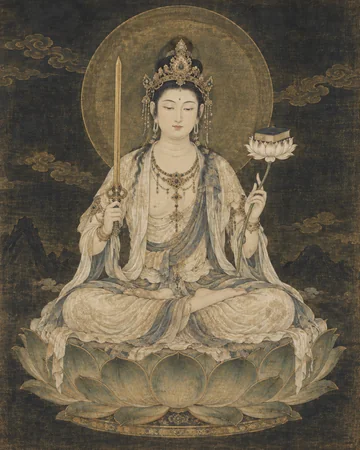
Monju Bosatsu is a bodhisattva who represents wisdom. Monju is worshipped both in the form of a triad supporting Shaka together with Fugen Bosatsu and as an independent principal image. Abe Monjuin explains its Monju as a figure riding a lion and setting out on a journey of preaching to bestow wisdom on people.
This introduction is based on materials from Shōhōin (Tobi Fudō). It is summarized within the scope of the beliefs and traditions those materials convey, and does not present explanations or practices shared by all schools, temples, and shrines.
English pages are the site’s own translations of its Japanese pages. The sources cited are in Japanese. 日本語で読む
The bodhisattva of wisdom that sees through delusion
Monju Bosatsu is a bodhisattva who represents wisdom. Monju is worshipped both in the form of a triad supporting Shaka together with Fugen Bosatsu and as an independent principal image. Abe Monjuin explains its Monju as a figure riding a lion and setting out on a journey of preaching to bestow wisdom on people.
Source: 安倍文殊院・飛不動尊 正宝院
Study, and the power to see things rightly
At Abe Monjuin, people offer prayers for passing examinations and for success in their studies. Monju's wisdom is taught not only as increasing knowledge, but as the working that cuts through delusion and sees the true nature of things. Symbols such as the sword, the sutra scroll, and the lion are also connected with this faith in wisdom.
Source: 安倍文殊院・安倍文殊院・飛不動尊 正宝院
Sending Zenzai Dōji on a journey of learning
In the story of the Kegon-kyō, Zenzai Dōji, guided by Monju, visits fifty-three spiritual teachers (zenchishiki) in search of awakening. Zenzai Dōji is also depicted in Abe Monjuin's Tokai Monju group of statues. It is a story of seeking the way and learning through encounters with many different people.
Source: 安倍文殊院
Mantra (in Japanese, as written in the sources)
おん あらはしゃな。
Source: 飛不動尊 正宝院
Shown as written in the Japanese sources. This site does not set how or how many times to recite it.
Related shrines and temples
- Godaisan Chikurin-jiKōchi, Kōchi Prefecture
- Hōkō-jiHamana Ward, Hamamatsu, Shizuoka Prefecture
- Tōchō-jiShinjuku, Tokyo
- Ebara-jiNishi, Sakai, Osaka Prefecture
- Kōtai-jiNagasaki, Nagasaki Prefecture
- Daiō-inHitachi, Ibaraki Prefecture
- Zenchō-jiŌtawara, Tochigi Prefecture
- Hōsen-jiKiryū, Gunma Prefecture
- Myōsen-jiEdogawa, Tokyo
- Chion-jiMiyazu, Kyoto Prefecture
- Monju-jiKumagaya, Saitama Prefecture
Related kami and buddhas
Sources (in Japanese)
- 飛不動尊 正宝院「仏様の世界:文殊菩薩・文殊師利菩薩」(2026-10-14 確認)
- 飛不動尊 正宝院「仏様の世界:目次」(2026-10-14 確認)
- 飛不動尊 正宝院「仏様の世界:十三仏」(2026-10-14 確認)
- 安倍文殊院「寺宝と文化財」(2026-10-15 確認)
- 安倍文殊院「合格祈願・学業成就」(2026-10-15 確認)