
Kami (Shinto deity)
Sarutahiko no Ōkami
猿田彦大神
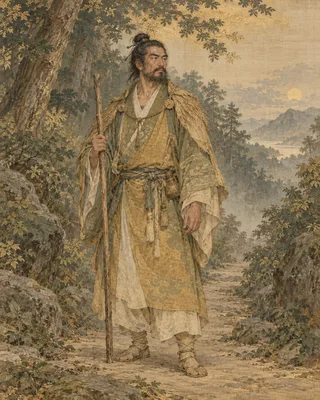
Sarutahiko Jinja introduces Sarutahiko no Ōkami as a kami who appears at the beginning of things and guides them. His role in leading the way for Ninigi no Mikoto in the story of the descent of the heavenly grandson is connected with faith in michihiraki (opening the way).
This page introduces myths and the faith handed down at individual shrines, with their sources. Descriptions of divine virtues are explanations within religious faith and do not guarantee the outcome of any prayer. We do not set uniform rules for the traditions or customs of individual shrines and temples.
English pages are the site’s own translations of its Japanese pages. The sources cited are in Japanese. 日本語で読む
A kami who opens the way and guides
Sarutahiko Jinja introduces Sarutahiko no Ōkami as a kami who appears at the beginning of things and guides them. His role in leading the way for Ninigi no Mikoto in the story of the descent of the heavenly grandson is connected with faith in michihiraki (opening the way).
Source: 猿田彦神社
Faith in wishes for a new step forward
At Sarutahiko Jinja he is revered as a kami who guides the direction in which one goes and the start of undertakings. This faith connects with prayers made when stepping onto a new path; it does not mean that the rightness of one's choices or success is promised.
Source: 猿田彦神社
Welcoming the heavenly grandson and returning to Ise
The shrine's history relates that after guiding Ninigi no Mikoto to Takachiho, he returned with Ame no Uzume no Mikoto to the upper reaches of the Isuzu River in Ise. It is a tradition that links the story of guiding the heavenly grandson with the worship handed down in the land of Ise.
Source: 猿田彦神社
The scene that follows in the Kojiki
In the section on "Sarume no Kimi" in the first volume, it is told that Sarutabiko no Kami, while fishing at Azaka, had his hand caught by a hirabu shellfish and sank into the sea. Sokodoku Mitama, Tsubutatsu Mitama, and Awasaku Mitama are names that correspond to the circumstances of that scene. We introduce this and the shrine's history of his return to Ise, each with its own source.
Source: 青空文庫(武田祐吉注釈校訂)
An example of a chant (in Japanese)
祓え給い、清め給え、神(かむ)ながら守り給い、幸(さきわ)え給え
Related shrines and temples
- Yūtoku Inari JinjaKashima, Saga Prefecture
- Tamura JinjaTakamatsu, Kagawa Prefecture
- Ōnominato JinjaKanazawa, Ishikawa Prefecture
- Shirahige JinjaTakashima, Shiga Prefecture
- Sarutahiko JinjaIse, Mie Prefecture
- Futami Okitama JinjaIse, Mie Prefecture
- Takaoka Sekino JinjaTakaoka, Toyama Prefecture
- Ōasahiko JinjaNaruto, Tokushima Prefecture
- Koma JinjaHidaka, Saitama Prefecture
- Shirasasa Inari JinjaHadano, Kanagawa Prefecture
- Owase JinjaOwase, Mie Prefecture
- Sanzō Inari JinjaFukuyama, Hiroshima Prefecture
Related kami and buddhas
Sources (in Japanese)
- 猿田彦神社「猿田彦神社について」(2026-10-15 確認)
- 國學院大學「古事記ビューアー・神名データベース「猿田毘古神」」(2026-10-15 確認)
- 國學院大學「古事記ビューアー・神名データベース「阿和佐久御魂」」(2026-10-15 確認)
- 國學院大學「古事記ビューアー・神名データベース「底度久御魂」」(2026-10-15 確認)
- 國學院大學「古事記ビューアー・神名データベース「都夫多都御魂」」(2026-10-15 確認)
- 青空文庫(武田祐吉注釈校訂)「『校註 古事記』上巻「猿女の君」」(2026-10-15 確認)
- 國學院大學「古事記ビューアー・神名データベース「阿和佐久御魂」」(2026-10-15 確認)
- 國學院大學「古事記ビューアー・神名データベース「猿田毘古神」」(2026-10-15 確認)
- 國學院大學「古事記ビューアー・神名データベース「底度久御魂」」(2026-10-15 確認)
- 國學院大學「古事記ビューアー・神名データベース「都夫多都御魂」」(2026-10-15 確認)